Maxim Gorky Quotes
Intellectual force is qualitatively the first and foremost productive force, and concern for its rapid growth should be the ardent concern of all classes.
Gorky, Maxim. Untimely Thoughts: Essays on Revolution, Culture and the Bolsheviks, 1917-1918. Translated by Herman Ermolaev, Paul S. Eriksson, Inc., 1968.


This was an incredible prediction that few people thought was possible. This speech was given in the early days of WWII when it was far from clear that we would win.


At the time very few industrialists appreciated the value of particular workers and tended to think of them as interchangeable parts.


This is a classic illustration of a quotation illustrating the problem that political discussions have with the issue of causality. Conrad is absolutely correct in stating that investment and innovation as the direct cause for most productivity. However, without the demand created by consumption (or the prospect of it) there will be little capital and effort at innovation. There is a causal chain and different ideological proponents argue for their preferred link in the chain tending to ignore the other links. Many liberals tout increasing consumption and pay little attention to the investment and innovation—an error of the opposite of Conrad’s.
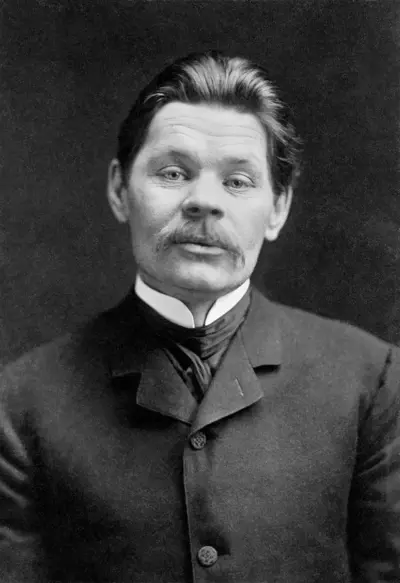
Alexei Maximovich Peshkov, primarily known as Maxim Gorky (Russian: Макси́м Го́рький), was a Russian and Soviet writer, a founder of the socialist realism literary method, and a political activist. He was also a five-time nominee for the Nobel Prize in Literature. Prior to his renown as an author, he frequently changed jobs and roamed across the Russian Empire; these experiences would later influence his writing. Gorky's most famous works were The Lower Depths (1902), Twenty-six Men and a Girl (1899), The Song of the Stormy Petrel (1901), My Childhood (1913–1914), Mother (1906), Summerfolk (1904) and Children of the Sun (1905). He had associations with fellow Russian writers Leo Tolstoy and Anton Chekhov; Gorky would later mention them in his memoirs.
