Robert Nozick Quotes
Individuals have rights and there are things no person or group may do to them (without violating their rights). So strong and far-reaching are these rights that they raise the question of what, if anything, the state and its officials may do. How much room do individual rights leave for the state?
Nozick, Robert. Anarchy, State, and Utopia. Basic Books, 1974, p. ix.


Note the use of the phrase “against the government.” One of the unique aspects of the American Constitution and The Bill of Rights is that the government is considered a potential and even probable infringer on the liberties of the people. It is almost as though the government was the potential enemy. Modern libertarians state this very explicitly and it is ever present in the views of both the right and left wings of American politics. Most centrists recoil at the thought that some citizens see the government as the enemy, but even in America there have been times where the government has infringed on the rights of citizens only to have the courts or future administrations and Congresses correct the error.


The major phrase was first used in a dissent by Justice Robert Houghwout Jackson in 1949 {633526} and later by Chief Justice Earl Warren {601702}


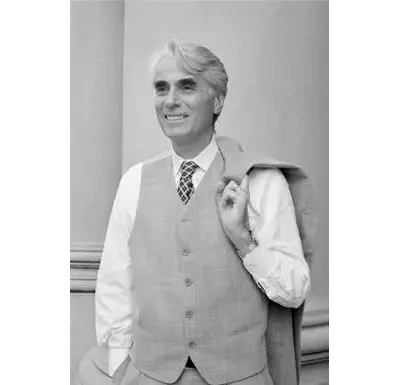
Robert Nozick was an American philosopher. He held the Joseph Pellegrino University Professorship at Harvard University, and was president of the American Philosophical Association. He is best known for his books Philosophical Explanations (1981), which included his counterfactual theory of knowledge, and Anarchy, State, and Utopia (1974), a libertarian answer to John Rawls' A Theory of Justice (1971), in which Nozick also presented his own theory of utopia as one in which people can freely choose the rules of the society they enter into. His other work involved ethics, decision theory, philosophy of mind, metaphysics and epistemology. His final work before his death, Invariances (2001), introduced his theory of evolutionary cosmology, by which he argues invariances, and hence objectivity itself, emerged through evolution across possible worlds.
