Anthony Kennedy Quotes
The Constitution promises liberty to all within its reach, a liberty that includes certain specific rights that allow persons, within a lawful realm, to define and express their identity.
Kennedy, Anthony. Obergefell v. Hodges. 576 U.S. 644, Supreme Court of the United States, 26 June 2015, p. 651.


Note the use of the phrase “against the government.” One of the unique aspects of the American Constitution and The Bill of Rights is that the government is considered a potential and even probable infringer on the liberties of the people. It is almost as though the government was the potential enemy. Modern libertarians state this very explicitly and it is ever present in the views of both the right and left wings of American politics. Most centrists recoil at the thought that some citizens see the government as the enemy, but even in America there have been times where the government has infringed on the rights of citizens only to have the courts or future administrations and Congresses correct the error.


He had been a Congressman before assuming the Presidency. Civil rights was a major subject of debate after the Civil War. One major issue was that of citizenship itself. Many contended that Americans were citizens of a state and dependant on the state for the protection of civil rights. However, the extent to which the Federal government could and should be the guarantor of citizenship issues was in dispute. Today with the issue settled in favor of Federal preeminence, it is hard to realize that this was very unsettled at one point in history. Garfield was one of those leading the effort for more Federal involvement and control.

See {587703} for a similar statement by a Supreme Court Justice.


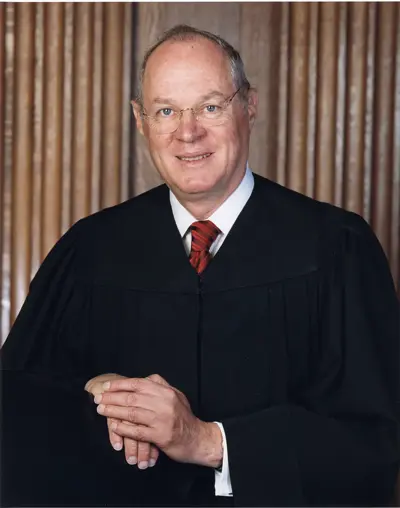
Anthony McLeod Kennedy is a retired American lawyer and jurist who served as an Associate Justice of the Supreme Court of the United States from 1988 until his retirement in 2018. He was nominated to the court in 1987 by President Ronald Reagan, and sworn in on February 18, 1988. After the retirement of Sandra Day O'Connor in 2006, he was the swing vote on many of the Roberts Court's 5–4 decisions.
