John Patrick Diggins Quotes
Do we leave our rights to the hopeful wisdom of the courts or to the elusive whim of the masses?
John Patrick Diggins, Historian, "The Judge Pleads His Case," New York Times, November 19, 1989
Sourced by: Eigen's Political and Historical Quotations

This was written during the George W. Bush Administration where the reaction to 9-11 was to curtail some civil rights and constitutional protections in favor of more national security. Bush was not the only President who eroded civil rights in a fear for National Security. FDR interned the Japanese Americans. Woodrow Wilson jailed pacifists who protested against the draft. John Adams passed the infamous Alien & Sedition Acts.


Note the use of the phrase “against the government.” One of the unique aspects of the American Constitution and The Bill of Rights is that the government is considered a potential and even probable infringer on the liberties of the people. It is almost as though the government was the potential enemy. Modern libertarians state this very explicitly and it is ever present in the views of both the right and left wings of American politics. Most centrists recoil at the thought that some citizens see the government as the enemy, but even in America there have been times where the government has infringed on the rights of citizens only to have the courts or future administrations and Congresses correct the error.


Catherine II—the Great—appointed a commission to suggest model laws for Russia based on some of the principles of the European Enlightenment. The laws were never officially adopted but they are interesting in that they were the product of “liberal” thinking at the time. This particular definition of “liberty” is similar to that ruse in many country’s modern constitutions which will “guarantee” a right like freedom of speech so long as it does not violate any laws.


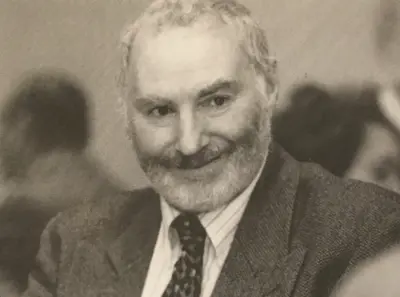
John Patrick Diggins was an American professor of history at the University of California, Irvine and Princeton University and the Director of the City University of New York Graduate Center.
