Louis D. Brandeis Quotes
The makers of our Constitution . . . conferred, as against the government, the right to be let alone - the most comprehensive of rights and the right most valued by civilized men.
Brandeis, Louis D. Dissenting opinion. Olmstead v. United States. 277 U.S. 438. Supreme Court of the US. 1928.


Note the use of the phrase “against the government.” One of the unique aspects of the American Constitution and The Bill of Rights is that the government is considered a potential and even probable infringer on the liberties of the people. It is almost as though the government was the potential enemy. Modern libertarians state this very explicitly and it is ever present in the views of both the right and left wings of American politics. Most centrists recoil at the thought that some citizens see the government as the enemy, but even in America there have been times where the government has infringed on the rights of citizens only to have the courts or future administrations and Congresses correct the error.

See {587703} for a similar statement by a Supreme Court Justice.


This is probably the first known use of the Bill of Rights phrase in the English language. For the earliest American use, see Edward Rutledge.
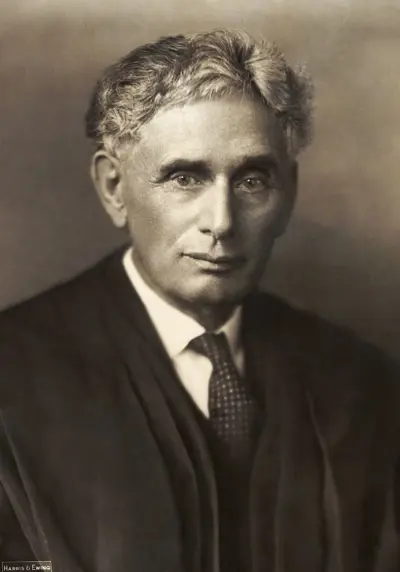
Louis Dembitz Brandeis was an American lawyer and associate justice on the Supreme Court of the United States from 1916 to 1939. He was born in Louisville, Kentucky, to Jewish immigrant parents from Bohemia (now in the Czech Republic), who raised him in a secular home. He attended Harvard Law School, graduating at the age of 20 with the highest grade point average in the law school's history. Brandeis settled in Boston, where he founded a law firm (that is still in practice today as Nutter McClennen & Fish) and became a recognized lawyer through his work on progressive social causes.
