John Buchanan Robinson Quotes
In this way, the charge that the bank makes for the use of its notes - the interest - is a continual and universal tax upon all the members of the community.


Attempting to defend charges that his bank and others were engaged in monopolistic practices:


At the time there was no national paper money. Individual banks printed their own and paper money was not accepted or heavily discounted most Americans. Most opposed a tender law that required paper money to be accepted in commerce.


At the time, a bank note—paper money issued be a private bank—was not backed by any gold or silver and was not insured bym the government. A bank could print as much as they wanted, so it was always worth less as the further you were from the particular issuing bank, the less you could get your bank note, because no one knew whether or not the issuing bank would redeem the note or even be in existence. So every private bank note had diminished value for the public. However, carrying gold and silver around and making change for precious metals was difficult and often impractical. So people used banknotes. The same thing happens with credit cards today. The merchant has to pay a fee to the credit card company and the bank and therefore charges us more for whatever we buy. But most consumers and merchants are willing to pay the difference to obtain the convenience of the credit card,

Stamp was a banker and the 2nd richest man in England at the time. Yet he warned about aspects of banking that needed reform and regulation.


The last sentence echoes a quotation of Napoleon. See {630664} .

The very act of printing money created a debt—at the time and until the Nixon Administration which went off the gold standard—the government owed the gold or silver and the spicie—the printed money—was a promissory note.

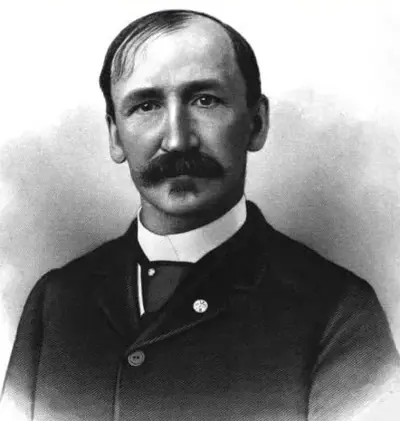
John Buchanan Robinson was an American politician from Pennsylvania who served as a Republican member of the Pennsylvania House of Representatives for Delaware County from 1884 to 1888, the Pennsylvania State Senate for the 9th district from 1889 to 1892 and the U.S. House of Representatives for Pennsylvania's 6th congressional district from 1891 to 1897.
