Stephen J. Field Quotes
The breadth and comprehensiveness of the words of the Constitution are nowhere more strikingly exhibited than in regard to the powers, over the subjects of revenue, finance, and currency
Stephen J. Field, 1816-1899, U. S. Supreme Court Justice, Julliard vs. Greenman, 1884
Sourced by: Eigen's Political and Historical Quotations

See {583710} for his grandchild’s variation.


At the time, there was no United States currency. Private banks in some of the states issued their own money. A dollar from Georgia might only be worth 75 cents in New York.


America had a difficult early history with money—especially paper money which had been issued by private banks but were trusted by few. Paper money had for the first time had been issued by the Federal Government during the Civil War. Many saw it as a wartime measure but not a good practice to follow. Garfield, along with many other leaders thought that it was not constitutional for Congress to issue paper money. Others prevailed as the need for a lighter and more practical form of currency was necessitated by a growing economy. Coins for large transactions between businesses especially was very awkward when chests of coins had to be delivered to pay for cattle, produce or manufactured goods at the wholesale level.


The sentence was actually drafted by Secretary of the Treasury Salmon Chase.


This was a very astute prediction. At the time, the United States gold mining production was second only to South Africa and American currency was based on the gold standard which seemed to all to be permanent. Half a century later, the U. S went off the gold standard.
There has always been a fear of inflation and currency debasement by governments. Since ancient times, rulers issued coins and when they were made of cheap metals like copper or iron, the ruler could mint as much as he wanted and when he did so the value went down. By using only precious metals, gold and silver, for coins, there would be a natural restraint on government. Garfield was one of those who believed that we should always have money of gold and silver. The United States would use that principle for the next century even backing its paper money with gold and silver. In the Nixon administration the United States abandoned the gold standard. Today, it is the ability of a country to produce things that maintains value of paper money which has been supplanted in many cases by electronic money.

This is the first major history of banks written in the United States.

See {632309} for an similar French Political expression made at approximately the same time over an important principle. However, commerce in its many forms such as business and job creation has been the major reason for compromising important moral and political principles during much of recorded history.


This is a very interesting quotation in that it is one of the first suggestions that money debasement can be caused by a lack of trust and confidence in the government rather than the percentage of precious metals in the coins.


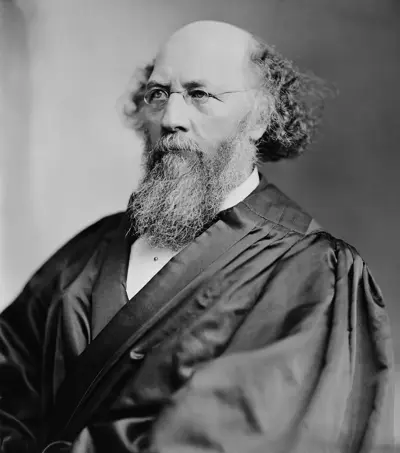
Stephen Johnson Field was an American jurist. He was an Associate Justice of the United States Supreme Court from May 20, 1863, to December 1, 1897, the second longest tenure of any justice. Prior to this appointment, he was the fifth Chief Justice of California.
