Lysander Spooner Quotes
It is with government paper, and bank paper, as it is with the paper of private persons; that is, it is worth just what can be delivered in redemption of it, and no more. We all understand that the notes of the Astors, and Stewarts, and Vanderbilts, though issued by millions, and tens of millions, are really worth their nominal values.
Spooner, Lysander. Our Financiers: Their Ignorance, Usurpations, and Frauds. A. Williams & Co., 1877, p. 5.

At the time there was no national paper money. Individual banks printed their own and paper money was not accepted or heavily discounted most Americans. Most opposed a tender law that required paper money to be accepted in commerce.


Attempting to defend charges that his bank and others were engaged in monopolistic practices:


This is the first major history of banks written in the United States.

The alternative would have been for the colonies to borrow English money at high interest rates and use that. Or use money from private banks (which occurred later.) Many conservatives are today a little shocked that some of the American Colonies just printed money with no backing but it worked—at least at the local level. A Boston Bank for example, would take a large commission for a Bostonian to convert Pennsylvania money into Massachusetts money. So it was not a very good system for trade between colonies and International trade. But English money was used for that. The colonists pragmatically got the “best of both worlds” and paid as little interest as they needed to. This system is essentially what we use today on a national scale with no gold or silver backing of the money.

At the time, a bank note—paper money issued be a private bank—was not backed by any gold or silver and was not insured bym the government. A bank could print as much as they wanted, so it was always worth less as the further you were from the particular issuing bank, the less you could get your bank note, because no one knew whether or not the issuing bank would redeem the note or even be in existence. So every private bank note had diminished value for the public. However, carrying gold and silver around and making change for precious metals was difficult and often impractical. So people used banknotes. The same thing happens with credit cards today. The merchant has to pay a fee to the credit card company and the bank and therefore charges us more for whatever we buy. But most consumers and merchants are willing to pay the difference to obtain the convenience of the credit card,

This is a remarkable quotation in that it proposed exactly what the United States did in the Nixon administration. We went off the gold standard and backed American money with the wealth and “full faith and credit” of the nation and all its assets. It has been the strongest and most sought after currency in the world despite the fact that it is not backed by gold or silver as earlier American currency was.
At the time any private bank could issue their own money. Private sector bankers thought it outrageous that the Congress should consider trampling on their rights to issue money. The solution that was finally adopted some years later was to use the Federal Reserve Board to control the money supply. It is independent of the Congress and the President but members are appointed by the President and confirmed by the Senate. Our system, like no other system, is a compromise where neither the Government or the Private Sector controls the American money supply.
Most people owned a little land as most of America were still farmers. They had small amounts of money at different times but spent it for necessities. A relatively few people (mostly in the East) had money—gold and paper currency backed by gold. If the price of property was high, only rich could afford to buy it. The home mortgage system did not then exist, so there was no way that the average land owner could get enough money to buy land to expand farms or buy for children unless the price was low. Today, most land owners want the price of land to be high. The financial system in use at the time makes the difference.


Much of the South during the Civil War lived in a fantasy universe where all the reality would not impinge upon them. Eggleston was an accomplished writer who had served in the Confederate army of the Civil War. 20 year after the war he wrote a series of articles for the prestigious Northern Atlantic Monthly trying to convey the war from the Southerner’s point of view. The South just kept printing money to take care of their perceived war and civilian needs without regard to the value of the money they were printing. Even in the 21st century collectors had a great deal of Confederate paper money, that had value only as a historical curiosity.

At the time, there was no United States currency. Private banks in some of the states issued their own money. A dollar from Georgia might only be worth 75 cents in New York.

Most modern economists argue just the opposite. The monetary supply for a growing world population would be insufficient for growth since the supply of gold is extremely limited. The United States was plagued by this problem from its earliest times as its growth was very strong, but there was not enough gold to support the growth. So silver was added, and then during the Civil War where growth rates were very large in the North, paper currency evaded the problem, which returned over the next century until the Nixon Administration—a very conservative one—shocked many conservatives by abandoning the Gold Standard and the U. S. has never returned to it.


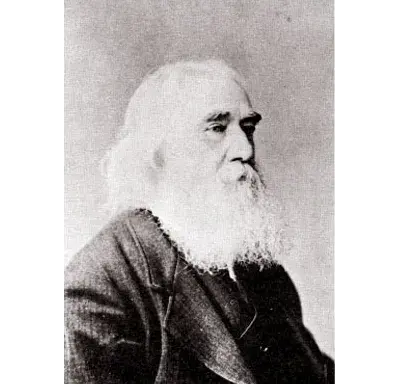
Lysander Spooner was an American individualist anarchist. He was also an abolitionist, entrepreneur, essayist, legal theorist, pamphletist, political philosopher, Unitarian, writer and a member of the First International.
