Alex Gibney Quotes
In the case of 'Zero Dark Thirty,' about the hunt for Osama bin Laden, an issue that is central to the film - torture - is so important that I feel I must say something. Mark Boal and Kathryn Bigelow have been irresponsible and inaccurate in the way they have treated this issue in their film.
Gibney, Alex. "Zero Dark Thirty's Torturing of the Truth." HuffPost, BuzzFeed, 21 Dec. 2012.


In the War on Terror, some CIA officers had gotten a George W, Bush Administration green light to torture some captured terrorists using a torture technique known as “water boarding”—a practice for which American military personnel were court marshaled and convicted in the Philippine War. The torture sessions had been videotaped, a normal procedure with CIA interrogations. The fact of the torture had leaked and a national scandal ensued with Americans on both sides of the question. President Bush and his Vice President publicly stated that the United States does not torture. Rodriguez then ordered the tapes destroyed. Later he gave his reasons after the Obama Administration decided not to investigate the matter or determine which, if any, CIA officials might have broken the law, by wither doing the torturing or destroying evidence—“obstructing justice.”

Several American soldiers have been court marshalled and found guilty of illegal torture for Warterboarding prisoners to induce them to provide information. Most experts agree that intelligence received this way is highly unreliable in that victims will say anything they think the torturer wants to hear to get the torture to stop.


Major Fleener had been assigned to defend accused terrorists who were being held at the military prison in Guantanamo, Cuba. For several years they were held without a hearing or trial. Then the U. S. Supreme Court ruled that they had to be given a hearing or trial. A Military tribunal was selected. The methods and procedures of these hearings came under much public world-wide criticism as they did not meet the normal legal standards of most countries. Surprisingly, one of the military officers made public statements criticizing the army and the trials.


The President and Vice President wanted places to interrogate suspected terrorists where they did not have to obey American law, where the press could be kept away from the prisoners, and there would be no way that a prisoner could get the assistance of attorneys and American Judges could not have any jurisdiction. A number of the prisoners had been picked up by mistake, or were accused by people who had scores to settle, and if the CIA had made a mistake, the public could not find out. Further, they wanted to torture certain prisoners and wanted places where they could use their “enhanced interrogation”—see {637536}--without the public finding out.

This was untrue. The CIA used several forms of torture on high value detainees. The torture was psychological and physical. Even the FBI had agents who observed CIA interrogations and complained to their supervisors. For cover, the George W. Bush administration, got 3 Justice Department Attorneys to write a secret memo defining certain types of torture as “enhanced interrogation”. Water Boarding, for which American soldiers had been court martialed and convicted for torture then became enhanced interrogation, and was used on a few terrorists. Because of the rigged Justice Department memo, the CIA claimed that they did not torture people. Another thing the CIA did was to turn over enemy to the intelligence services of third countries like Egypt, where torture was used commonly with no regard for the Geneva convention or other human rights provision. CIA agents then watched and asked questions but they claimed that they did not torture which was in some sense literally true.
The treaty to which he referred was The Convention against Torture and Other Cruel, Inhuman or Degrading Treatment or Punishment. During the George W. Bush administration the CIA had tortured 3 captives in the War on Terror. The CIA destroyed the video tapes of the torture sessions and many Americans wanted President Obama to investigate and prosecute the torturers in accordance with the requirements of the treaty when there is a torture incident. However, a major ethical and legal complication was that the Bush Administration had issued an official legal memorandum to the CIA which said that the forms of torture that they used, water boarding, was not legally torture. Most legal scholars agree that this legal opinion was incorrect and America had previously prosecuted and punished the few American soldiers who had used Waterboarding. President Obama decided that since the CIA torturers, had been authorized in writing, that a criminal prosecution would be unfair. He also declined to have the Justice Department investigate the torture incidents, Many disagreed, and this quotation summarized their point of view. See {642428} for some of the language of the Convention.

He was arguing that even if torture might provide useful intelligence not otherwise obtainable, it is not necessary in order for us to succeed in our objectives. Ironically, the military interrogation rules prohibited torture in conformity with US law and treaties but the CIA ignored those restrictions and secretly tortured a number of victims in the War on Terror until their actions became public and they too were required, by executive order to follow the military interrogation guidelines.
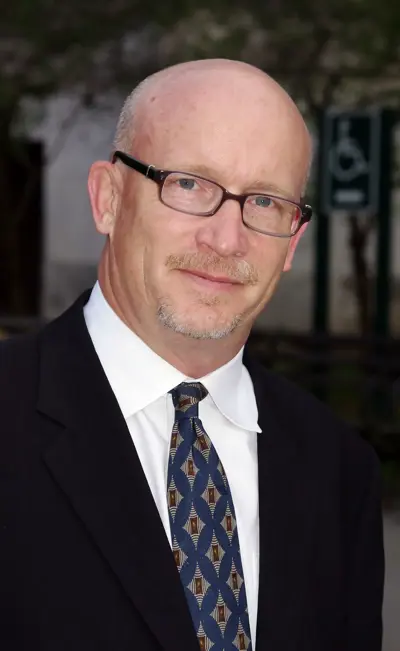
Philip Alexander Gibney is an American documentary film director and producer. In 2010, Esquire magazine said Gibney "is becoming the most important documentarian of our time".
