Vernon Lyman Kellogg Quotes
In the case of the mortality from war it is precisely this testing of the whole population, this randomness of exposure to its causes, that does not obtain. To my mind the immediate and the sufficient answer to the claims of those who see in war a biologically race-purifying agent, is the exposure of the character of the selection which war's mortality and injuries entail. Military selection is as far as possible removed from natural selection. It is peculiarly unnatural.
See {631151} for the argument that Kellogg counters here. The bizarre theory is that in war, the less fit individuals get killed, while the survivors who are “superior” live on to breed and improve the human race. The absurdity is that casualties of war are mostly random and if anything, the bravest are killed.
Vernon Lyman Kellogg, 1867-1937, Writer, Entomologist, Evolutionary Biologist, “Eugenics And Militarism”, The Atlantic Monthly, July 1913
Sourced by: Eigen's Political and Historical Quotations

This quotation illustrates the bizarre logic used by some war enthusiasts once Darwin’s evolutionary principles received wide distribution. Kellogg explains their notion. The absurdity is that there is nothing that characterizes the soldiers who lived differentially from the soldiers who died. The survivors of a bomb if any are random or determined by position and not intellect, courage, strength or any other trait that might be used selectively. See Kellogg’s explanation {631167}.

Suggesting that the War Office be less euphemistic, hiding the horrors of war he proposed signs of the office doors. In 1799 the same article appeared again under the name of Dr. Benjamin Rush who may have plagiarized the original or, as some argue, may have actually authored the 1792 article.

Washington and Green won very few battles as the strategy was, like many revolutionary movements, simply to avoid losing and being wiped out—the strategy that finally won the war.

Even in democratic America, this has been true. We spend almost any amount of money to give our military the weapons of war that will make them more effective soldiers, but when they return with mental and physical wounds, government money is not so easy to come by to preserve them in good health. Cost is a major consideration in Veterans benefits and care, but weapons expenditures have little restraint. It has been so for many years in many cultures.


This is a very important quotation. This was not the ravings of a right wing extremist. It was a normative view. This book was a best seller in Germany. This quotation illustrates the mentality of the conservative, militarist, culture that dominated Germany at the time. Racism was normative then in Germany. It was not the Nazis who introduced the concept of inferior races to Germany. Through this book and much before it, the idea was well established in aristocratic, militaristic culture. Also, note that the “inferior races” were considered a threat to civilization, not just inferior beings.


It is not clear whether their manifesto was written by D’annunzio himself or followers in Fiume the Dictatorial mini-state that he ruled, He was a precursor to the Fascists of Europe and this is the origin of the Fascist glorification of war. Hitler and Mussolini also picked up the dagger as a symbol (see Quotation 643744), the black colored uniforms and the stiff-armed salute from D’annunzio.


This would be like an American President firing the congressional chaplains. However this is only one small, but telling, example of Atatuk’s secularization of the nation which had a great deal to do with Turkey becoming a modern great power—by far the strongest and most developed of the Islamic world.


The Wars continued over a decade, costing thousands of American (and Coalition) troops their lives, many more their limbs and mental well-being, with a monetary cost of over trillions of dollars, and the achievements have been few and meager.

The German war plan called for attacking France through Belgium. However, Belgium was intent on remaining neutral. International law prohibited a neutral country from allowing troops of either side to enter and maneuver in its territory. The Kaiser and the German leaders know they were violating International law and rationalized it by stating that after they defeated France, they would treat Belgium well.


This was the exact political logical scenario that German socialist Bebel had predicted a few years earlier--{642075}. “Hectacomb” was an ancient Greek term referring to the public sacrifice of the blood of 100 oxen. It developed a more generalized meaning referring to making a very large human sacrifice of life for a national purpose.

This is a very important quotation because it and {641523} show the great difficulty that Washington was under and the fact that he repeatedly asked Congress for assistance very little of which was provided.
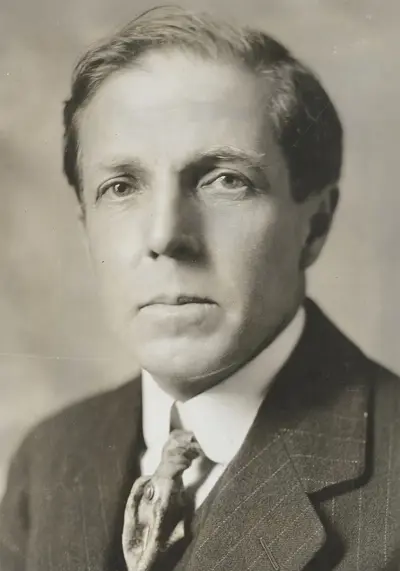
- Born: December 1, 1867
- Died: August 8, 1937
- Nationality:
- Profession:
Vernon Lyman Kellogg was an American entomologist, evolutionary biologist, and science administrator. His father was Lyman Beecher Kellogg, first president of the Kansas State Normal School (now known as Emporia State University), and former Kansas Attorney General. In 1908, Kellogg married Charlotte Hoffman and the two welcomed their only child, Jean Kellogg Dickie, in 1910.
