Bobby Scott Quotes
In the Brown decision, the United States Supreme Court unanimously struck down the legal and moral footing of racially segregated public education in this country.
Scott, Robert C. "50th Anniversary of Brown v. Board of Education." Congressional Record, vol. 150, 12 May 2004, Government Printing Office, 2004.


There are few people today who could believe that a United States senator would castigate the head of a Federal Agency for spreading “racial equality propaganda.” But at the time—1943—the actions of Education Commissioner John W. Studebaker and his Assistant took remarkable courage.

Berea College in Kentucky was founded as an interracial college. This law made it illegal in Kentucky to operate an integrated college. Day was not only a racist but a sexist as well. He introduced and got it passed another education law that made co-education in Kentucky illegal
This widely publicized statement by Mr. Ethridge was made when he was a member of the President's Committee on Fair Employment Practices during the hearings of this Committee at Birmingham, Alabama.

Bickel was then clerk to Justice Frankfurter.

Following the lead of Arkansas, many southern schools were closed by order of the Governor when they received a court order to desegregate. Southern education was the poorest in the nation and the Southern students not able to go to school made the situation worse. Governor Almond changing his position realized that the cost of defying the Constitution and the courts was the ignorance of the students of the state, and became a major force persuading the state to integrate their schools. He is remembered for his leadership of desegregation and most people have forgotten that at the beginning of his term as governor he was as bad as most of the other Southern segregationist politicians.


Plessy v. Ferguson was one of the worst Supreme Court Decisions in American history. It held that states could provide and/or mandate racially segregated facilities and institutions so long as they were equal.


Quoted in the Court’s notes of the meeting

This painting depicted a young black girl walking to school surrounded by 4 U. S. Marshalls protecting her from the crowd of white racists trying to prevent her from attending an elementary school under court order. The vicious race hatred that school integration revealed was the national problem that was then surfacing. The graphic is the illustration that appeared in Look with that name.

Incredibly enough, until this Supreme Court Decision, bigots would sell a home on the open market and write into the deed that the house may never be sold to a Black, a Jew, a Mormon, or any other person one of the owners did not like. This was actually enforced by American courts trying to preserve segregation in housing until 1948 and the 1956 decision stopped the practice but housing segregation persisted by other means.


The case was Shelley v. Kraemer where the Supreme Court outlawed discriminatory restrictive covenants A restrictive covenant was a condition that was written into the deed on a piece of property. Even if the owner of the home did not want to discriminate, the previous owners who wrote the restrictive covenant into the deed (or his relatives and heirs) could sue and invalidate the sale. In many cases, insurance would not sell title insurance or banks would not give mortgages for a Black or a Jew where there was a covenant in the deed, even if the covenant was more than 100 years old. Homeowner associations would also enforce the covenants which were originally written into all the deeds of the development. Once the supreme court ruled that restrictive covenants were unconstitutional, no court would enforce any of these lawsuits. It was one of the fastest steps forward in the history of Civil Rights since the day after the court decision racists could no longer enforce the covenants that were in tens of millions of deeds in America.

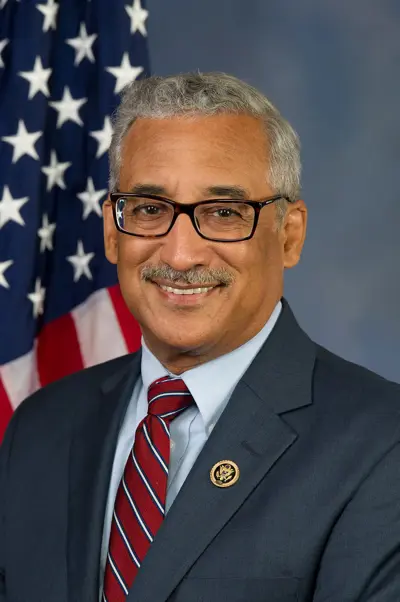
Robert Cortez Scott is an American politician serving as the U.S. Representative for Virginia's 3rd congressional district since 1993. A member of the Democratic Party, he is the dean of Virginia's congressional delegation. The district serves most of the majority-black precincts of Hampton Roads, including all of the independent cities of Franklin, Newport News (where he resides) and Portsmouth, parts of the independent cities of Chesapeake, Hampton, Norfolk and Suffolk and all of Isle of Wight County.
