Samuel Adams Quotes
In regard to religion, mutual toleration in the different professions thereof is what all good and candid minds in all ages have ever practiced, and both by precept and example inculcated on mankind.
Adams, Samuel. The Rights of the Colonists. 1772. The Writings of Samuel Adams, edited by Harry Alonzo Cushing, vol. 2, G. P. Putnam's Sons, 1906, p. 352.


This is the first American ordinance of freedom of conscience. Note that it only provided freedom of religion for Christians. However, that was an important first step as different sects of Christianity had been persecuting each other whenever the opportunity arose.


At first this clause appears to be very enlightened and establishing freedom of conscience. This clause allowed Catholics to practice freely whereas in other colonies they could not. However, as one reads on, it becomes clear that the “tolerance” is limited to Christians only. Then if one examines the exception within the parentheses and refer to the rest of the act—see {611994}—, one finds that even Christians who have certain theological beliefs are to be put to death—those for example who deny the holiness of the Trinity such as Unitarians who were a major group in the New England Colonies. It was a significant step at the time however to protect Roman Catholics.
By the beginning of the 21st Century, some Republicans had perfected the art of naming legislation completely contrary to its intent and effect in order to make opposition to it more difficult for opponents in the legislature. But nothing they ever did came close to the audacity of naming this legislation, The Toleration Act, as it was about the most intolerant legislation ever passed in America. Exactly what the motivation of the legislative drafters was is not known. One theory is that as a Catholic Colony, perhaps they really thought that they were being tolerant as they would not execute Protestants except Unitarians. In any event is was a low point in American history and was one of the examples that was before the Founding Fathers when they added the First Amendment to the Constitution. See {624142} for the text.

This is a critical quotation on the government establishment of religion issue. There are a few people who have argued over the years that the Founding Fathers and their culture was religious and where they were careful to avoid favoring one religion over another, they did NOT intend to put atheism on the same equal plane as religion as far as government action is concerned. However, some of the Founding Fathers were atheists, and some others like John Adams were deists—they believed in a God but not in the Trinity or in Judaism or any organized religion. So this quotation makes it clear that the First Amendment does NOT favor religion over non religion or secularism. Atheism must be on an equal footing but not on a higher plane.


Those who claim that the founding fathers contemplated religion as a critical component of government often point to this article of the South Carolina Constitution. However, they ignore the almost simultaneous passage of the New York constitution as in {612166}. When the framers of the Constitution met in 1787 in Philadelphia the separation of church and state issue was not really resolved and awaited the Bill of Rights where the separatists won out.


Martin wanted William Howard Taft to answer questions about his religious beliefs. Taft was TR’s selection to be his successor. Ironically, a starting with John F. Kennedy, many presidential candidates have been asked about their religious belief’s and have answered whereas Roosevelt would have them not reply to such inquiries.

Anne was a Protestant but her father James II was a Roman Catholic. There was always suspicion about her true religious allegiance by the extremists in the Church of England. The Act of Toleration, despite its name, required the Church of England to be the established church and the sovereign’s to be the heads of the church.


Pen name: Jack Nipps. Leland was a Baptist evangelist who had worked with Thomas Jefferson and James Madison to secure Freedom of Conscience in Virginia. Many people think that ideas such as this are the views of irreligious men and women, but Leland was a devout, evangelical Baptist and Baptists suffered discrimination in early Colonial America. Freedom of conscience was essential for all religions who were not in the local majority. Tolerance essential. See 43,065.
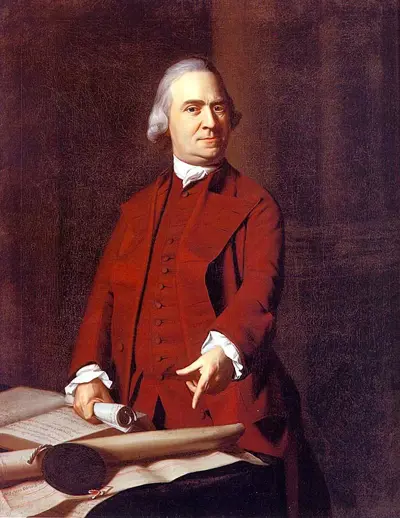
Samuel Adams was an American statesman, political philosopher, and one of the Founding Fathers of the United States. He was a politician in colonial Massachusetts, a leader of the movement that became the American Revolution, and one of the architects of the principles of American republicanism that shaped the political culture of the United States. He was a second cousin to his fellow Founding Father, President John Adams.
