Joseph Cannon Quotes
In our anxiety to get votes, we sometimes put in our platform things that are not orthodox.
Joseph Cannon, 1836-1926, U. S. Congressman (Republican, IL), Speaker of the House, Explanation of why the party had flip flopped on the tariff issue in their platform, November 18, 1908
Sourced by: Eigen's Political and Historical Quotations


Essentially Trollope claimed that English political parties are by their very nature, conservative, in the sense that they tend to resist great change. This has tended to be true in America and other democracies, but there are a number of exceptions. Where political parties are totally unsuccessful, they have little to lose. Likewise, when a political party becomes overwhelmingly dominant, it tends to overreach and try and make ideological change. However when there is true contest among the parties, they tend to be conservative in the sense that even if they are liberal parties, they do not move in extreme ways.

He opposed all government bail outs, give always, and other programs where the government gave money to individuals or companies other than fair market value for work, products or services. A large number of Americans benefit from one or more of these programs so Paul viewed his position as “attacking Santa Claus.” There are many Americans who understand that there is a cost to all programs, and that great political debate in America is when the cost is worth it and when not. Even Paul came to oppose withdrawing the social safety net unless we could create other mechanisms.


“Camels” and “Chesterfields” were the brand names of 2 of the very popular cigarettes of the time when the danger of cigarette smoking was not as well understood and a much higher proportion of the nation smoked.

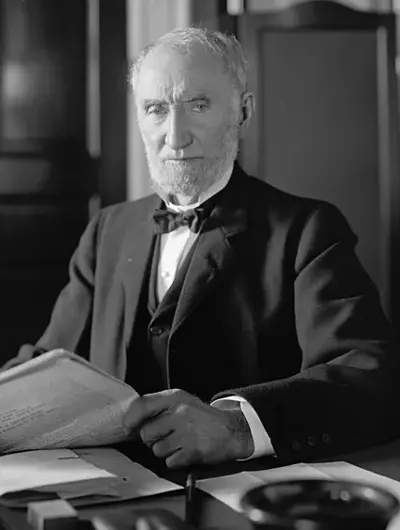
Joseph Gurney Cannon was a United States politician from Illinois and leader of the Republican Party. Cannon served as Speaker of the United States House of Representatives from 1903 to 1911, and many consider him to be the most dominant Speaker in United States history, with such control over the House that he could often control debate. The Cannon House Office Building, the oldest congressional office building, completed in 1908, was named for him in 1962.
