John Stuart Mill Quotes
In early times, the great majority of the male sex were slaves, as well as the whole of the female. And many ages elapsed, some of them ages of high cultivation, before any thinker was bold enough to question the rightfulness, and the absolute social necessity, either of the one slavery or of the other.
Mill, John Stuart. The Subjection of Women. Longmans, Green, Reader, and Dyer, 1869, p. 18.


This was formalized in 1972 and was the law of the land. “Sack” is a difficult translation. The Albanian concept is that she is an object with no feelings or thinking ability. Women were forbidden from obtaining a divorce, and the wife's parents were obliged to return a runaway daughter to the husband or else suffer shame which could even result in a generations-long blood feud. In the 1960s Enver Hoxha led the Communist Government in a major reform movement on the rights of women. See {639128}.


This proverb is a large part of the conceptual basis of the concept of honor killing. It starts with the notion that women are property. However, being animate property women are in the same class as livestock. And if a camel or a donkey get lose and does damage, the owner is responsible. So if a woman does something wrong, it is the father or the husband who is responsible. Since sexual behavior of most kinds is contrary to the Islamic custom and law, any activity in this regard, demonstrates that the father of husband has not been up to his obligations and is therefore dishonored. Therefore, the least he can do, to provide a deterrent to other women is to kill the offending female. Without the concept of property, the entire chain of logic collapses under its own weight.


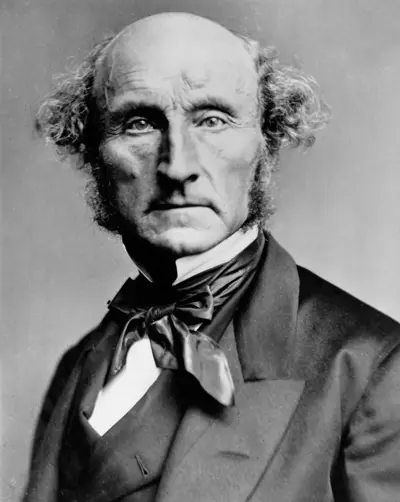
John Stuart Mill, usually cited as J. S. Mill, was an English philosopher, political economist, Member of Parliament, and civil servant. One of the most influential thinkers in the history of classical liberalism, he contributed widely to social theory, political theory, and political economy. Dubbed "the most influential English-speaking philosopher of the nineteenth century", he conceived of liberty as justifying the freedom of the individual in opposition to unlimited state and social control.
