Benjamin R. Barber Quotes
In a world where socialism has disappeared, it can still be found lurking in the boardrooms of failing and bad-risk investment companies … that yearn to spread their losses across the backs of long-suffering taxpayers.
Benjamin R. Barber, Political Scientist, Jihad vs. McWorld, 1995
Sourced by: Eigen's Political and Historical Quotations


He had already decided to save General Motors which was much larger and more critical to the national economy. The normal capitalistic broken down and there were no private firms that were willing to invest, control and continue the companies at any price. There were 1 million immediate jobs at stake with GM plus the collapse of the American Auto Industry including dealers and suppliers. With Chrysler, there were only 300,000 immediate jobs at stake. Ironically, one of the major reasons for trying to save both companies was the fact that Summers team had discovered that the companies were very badly managed. If the bailout could be leveraged to force radical management change and reform, the chances of success would have been much greater than if the companies had been well managed but were still losing money rapidly. The policy decision was brilliantly successful. The reformed auto companies quickly became profitable, and the taxpayer loans were paid back early with interest to and profits to the taxpayers. All those jobs and an iconic American industry not only were preserved but became very profitable and strong and in the final analysis, it did not cost the taxpayers even one dollar. Ford was in less trouble, but if the other two companies failed, the Ford suppliers would mostly fail, and Ford also would have gone down.

This Republican mantra has been central for the Republicans for the entire century after Theodore Roosevelt who thought that business had to be regulated and controlled. The same basic speech has been given by conservative Republicans ever since.

Chrysler had gotten into cash flow difficulty and could not borrow enough money to keep open until they could pay their bills. Their credit was not good enough for most lenders. Iacocca approached the Federal Government and asked for a Federal loan guarantee of about $1 billion. Some members of Congress and public critics were outraged that a private company might get a Government bail out in the form of a loan guarantee. Extremists of both parties did not want to set such a precedent of using Federal money to assist private corporations. Iacocca was quite defensive about asking for what seemed to be a precedent setting request. However, he then found out that it would set no precedent at all. Chrysler got the loan, paid all its creditors, paid back the loan with interest, and the company did not go under, but did well for a while.

This warning was a decade before the Meltdown of 2008, but was not heeded by any of the politicians. As a result a number of the companies that made all those risky decisions assumed that if something went terribly wrong the government would not let them fail. Unfortunately, they were right and the taxpayers spent billions to prevent companies from failing. After the meltdown all the politicians vowed to end the too big to fail concept, but while some improvements were made, the Congress could not come to agreement, and the markets and a number of companies think that they are still too big to fail. This is particularly true for Defense Contractors where the government has and probably will in the future, protect irresponsible companies from failure if they are the only company that makes needed weapons and other equipment.


She was then the European Commissioner for Competition.
The last sentence of this quotation was very typical of many middle and even upper middle class Americans in 2016. Change, technological, social and political, was evident almost everywhere and unlike most change of the past, where the change took place over extended periods of time, change was occuring much faster. Voss, like so many others, was feeling overwhelmed, and powerless to control her own life adn destiny. She clearly still had much control over much of her life as her business wold not even exist were it not for the ideas and ahrd work of Casey and her partners, but compared to just decades ago the forces of change were so dynaic that many American felt as she did--that EVERYTHING was out of her control.


See {641989} & {641989} for more on the Radio Channel corrupt giveaway.


Corporations were not common at the time. The corporations of the day like large corporations today had directors and managers who were not the principle owners. There was deep suspicion that these professional managers would not watch over the money of the corporation with the same degree of vigilance as would the owner manager. The same problem exists today when the economic vested interest of the managers and the shareholders do not always coincide. Various bonus schemes have been created to ameliorate the problem, but as the meltdown of 2008 and the Great Recession demonstrated, many managers would make ruinous decisions for the corporation as they could get large bonuses. “Copartnery” is an older English term for “partnership.”


She had done a monumental exposé of the Standard Oil Company illegal and immoral activities. The public was so aroused that many reforms were instituted and the Standard Oil Company Trust was broken up into many smaller companies. Tarbell was then, in the words of S. S. McClure, “the most famous woman in America.”
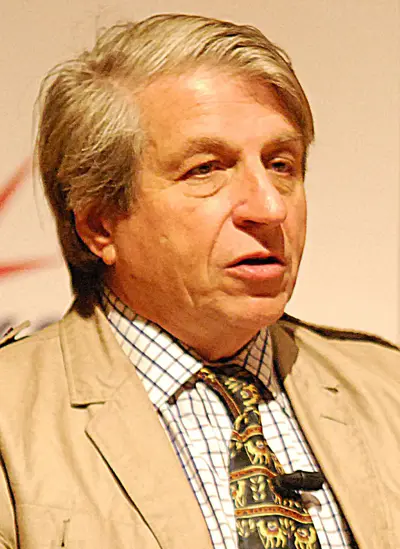
Benjamin R. Barber was an American political theorist and author, perhaps best known for his 1995 bestseller, Jihad vs. McWorld, and for 2013's If Mayors Ruled the World as well as the classic of democratic theory, 1984's Strong Democracy (revised in 2004). He became a top-level international consultant on participatory democracy as well as an adviser to Bill Clinton, Howard Dean, and Muammar Gaddafi.
