Stanley Kubrick Quotes
I'm not saying we wouldn't get our hair mussed, Mr. President, but I do say not more than ten to twenty million dead depending upon the breaks.


This quotation is very important in helping to understand the 1950s in America with respect to nuclear weapons policy. McCormick was one the better educated, sophisticated, and influential Americans. Yet he appears to be a technological and nuclear ignoramous. Most people had not yet realized that atomic weapons were not just much larger traditional bombs. They could do terrible damage, but it would always be localized they thought. Chicago might be destroyed but the people out of range would be OK. He never got it that a dirty bomb could be dropped on Detroit and depending on which way the wind is blowing could wipe out Chicago and much of the Midwest as well. He knew nothing of the genetic effect the radiation, nor the implications for the environment of maintaining a large nuclear manufacturing industry. He and many like him did not realize that after the first bombs were created, how easy it would be for the Russians and others to also develop a nuclear arsenal. And 50,000 warheads was just a matter of effort. The implications of these things would inhibit our carrying out his and others ideological views of foreign policy. Oppenheimer and most nuclear scientists explained all this, but believing them and acting on those beliefs would have been too much of a change.


I can go into my office and pick up the telephone, and in 23 minutes 70 million people will be dead.
He had been asked if the impeachment proceedings weakened him as the President.

The Scientific Project that developed the Atomic Bomb. Oppenheimer was the great physicist who directed the successful development of the atomic bomb so as to build the weapon before Hitler did in World War II. However, as the technology evolved, he had doubts as to the wisdom of creating even more powerful hydrogen weapons. His viewpoint was hurting the administration’s policy of rapid unlimited nuclear weapons development, and he was the victim of a character assassination whereby his security clearance was withdrawn. The “father” of the atomic bomb was the first American casualty of atomic weapons development.

This is a very important quotation. It is often cited by preventive war hawks to show that deterrence might not be a sufficient inhibitor against an extreme ideological enemy. In this case it was political philosophy that would make the enemy willing to have the majority of its population die to reach the ideological objective. More fearful is the prospect of the Theocracy of Iran where the leaders may believe that nuclear jihad is a commandment of God. More critical is the Islamic theology which says that if most of the Iranian Muslim population die in a nuclear war that they start all those people will be martyrs and immediately go to God’s Paradise. Thus, even the dead Muslims are not victims and the nonbelievers should be killed. For extremely fanatical Muslims nuclear war can be a logical and holy course of action.


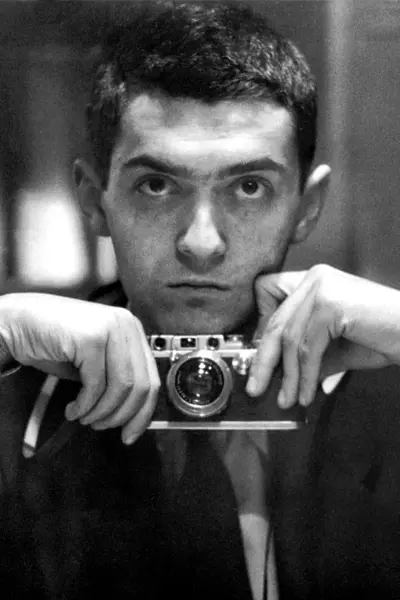
Stanley Kubrick was an American film director, producer, screenwriter, and photographer. He is frequently cited as one of the greatest filmmakers in cinematic history. His films, which are mostly adaptations of novels or short stories, cover a wide range of genres, and are noted for their realism, dark humor, unique cinematography, extensive set designs, and evocative use of music.
