Calvin Coolidge Quotes
If you can get enough votes so that mine will make a majority, you can have it.
Coolidge, Calvin. The Autobiography of Calvin Coolidge. Cosmopolitan Book Corporation, 1929.


Whithead’s view which seems intuitively right to most citizens, tends to be the one that the majority espouses but the minority opposes. At the time, the Republicans controlled the White House and there were a number of polarizing issues, where the Republicans could not obtain consensus and then decided. However, then the Democrats gained control of the White House and Congress the next year, it was the Democrats who claimed that they had to decide. The Republicans, now in the majority, argued that significant changes in America should not be made by narrow majorities and major issues should be tabled if there was no substantial majority. That was the position that the Democrats had espoused when they were in the minority.


Although Reagan is reported to have said this on numerous occasions, no definitive citation has yet been found. The earliest reference to a similar quote is found in “The Consent of the Governed, and Other Deceits” (1971) by New York Times political analyst Arthur Krock in the chapter titled "The Second Oldest Profession.”


The card was issued to all American troops in the theater. Similar versions were distributed to troops in Iraq, and other Arab countries.


See Henry Clay for an earlier expression of this point.


In the summer of 1989 the House was anxious to adjourn for the summer recess but the savings and loan bailout legislation was stalled. The leaders of both parties forged a compromise which was not enthusiastically received by their members. A Democratic leader advised:
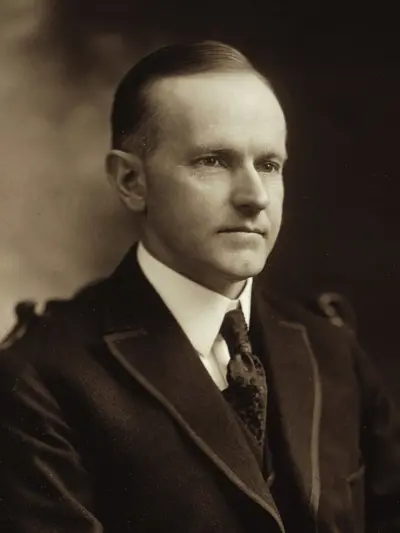
Calvin Coolidge was an American lawyer and politician who served as the 30th president of the United States from 1923 to 1929. A Republican lawyer from New England, born in Vermont, Coolidge worked his way up the ladder of Massachusetts state politics, eventually becoming governor of Massachusetts. His response to the Boston Police Strike of 1919 thrust him into the national spotlight and gave him a reputation as a man of decisive action. The next year, he was elected the 29th vice president of the United States, and he succeeded to the presidency upon the sudden death of Warren G. Harding in 1923. Elected in his own right in 1924, he gained a reputation as a small-government conservative and also as a man who said very little and had a rather dry sense of humor.
