Lyndon B. Johnson Quotes
You've got to work things out in the cloakroom, and when you've got them worked out, you can debate a little before you vote.
Caro, Robert A. The Years of Lyndon Johnson: Master of the Senate. Alfred A. Knopf, 2002, p. 556.

The card was issued to all American troops in the theater. Similar versions were distributed to troops in Iraq, and other Arab countries.

Whithead’s view which seems intuitively right to most citizens, tends to be the one that the majority espouses but the minority opposes. At the time, the Republicans controlled the White House and there were a number of polarizing issues, where the Republicans could not obtain consensus and then decided. However, then the Democrats gained control of the White House and Congress the next year, it was the Democrats who claimed that they had to decide. The Republicans, now in the majority, argued that significant changes in America should not be made by narrow majorities and major issues should be tabled if there was no substantial majority. That was the position that the Democrats had espoused when they were in the minority.


See Henry Clay for an earlier expression of this point.


In the summer of 1989 the House was anxious to adjourn for the summer recess but the savings and loan bailout legislation was stalled. The leaders of both parties forged a compromise which was not enthusiastically received by their members. A Democratic leader advised:


When whites first came to America, the Iroquois, were the most sophisticated Native Americans. They were actually a confederation of 5 different tribes each of which was composed if many clans. Although fierce warriors, they had agreed not to fight each other and to assist if any were attacked. They developed a strong agricultural base, to go with the fishing and hunting, and their confederation were very aggressive and sophisticated traders taking them far from their upstate New York “capitol.” Their governmental structure was quite sophisticated with an elaborate, formal, system of checks and balances, multi-cameral legislatures that recognized numbers of citizens, power and wealth, and even cultural traditions. They were literate, capitalistic and globalistic in that they wanted to trade with all. They had written laws, and women had a role that was unique in world history in that only women owned property in a matrilineal society. Further, it was only the Clan Mothers who voted for the 50 Sachems (~Senators)—but their selections had to be accepted by the people they represented. Ironically the descendants of the Iroquois who remained in New York became a very successful Native American group. In the 2000 census, the average Indian in New York State earned the same income as the average White with no Indian gambling money.

This small booklet was the first describing parliamentary procedures and it rapidly sold 500,000 copies. It has become the bases for legislatures, committees, boards ever since. The Congress and most of the State and local legislatures all are based on it.
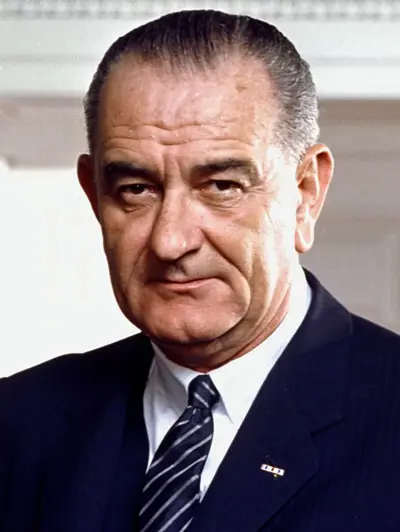
Lyndon Baines Johnson, often referred to by his initials LBJ, was the 36th president of the United States, in office from 1963 to 1969. He served as the 37th vice president from 1961 to 1963 and assumed the presidency following the assassination of President John F. Kennedy. A Democrat from Texas, Johnson was also a United States representative and later majority leader in the United States Senate. Johnson is one of only four people to have served, at various times, in all four federal elected positions.
