Emory Scott Land Quotes
If we do not watch out step, we shall find the White House en route to England with the Washington Monument as a steering oar.
Expressing concern over the amount of lend-lease and other aid going to England:
Emory Scott Land, 1879-1971, Admiral, U. S. Navy, Chief, U. S. Maritime Commission, Quoted in Sherwood, Roosevelt and Hopkins, An Intimate Biography, Harper, 1950
Sourced by: Eigen's Political and Historical Quotations


The president had wanted to send large amounts of armament and other material to England—Lend Lease—to help stave off a German invasion. The leading military men argued against it. Conservative isolationists and Congress had prevented our own military from having enough supplies and equipment. Also the conclusion of the American military leadership of the time was that England was beyond help and would have to capitulate to Germany. Even with massive armaments they would not be able to defend themselves. Any arms that we might provide to England would then fall into German hands. Roosevelt then sent his civilian assistant, Harry Hopkins, to England to assess their ability to survive. Hopkins with no military experience told Roosevelt that with the arms and ammunition England would be able to forestall invasion. Roosevelt trusted Hopkins’ judgment and decided to arm England. Hopkins turned out to be exactly correct and the military leadership was wrong. See {642830}.

He was reacting to the Japanese Defense of Okinawa which was failing on every front. When Japan started the war with America, its leaders were not at all convinced that they could drive America from the Pacific, but they were convinced that America would not spend the men and material to invade Japanese territory and that they would be able to negotiate a peace at some point if the price of invasion was too high. That assumption was brought into doubt.


FDR was hoping to defeat or at least stop Hitler and Germany by arming England and Russia and thus avoid having American troops committed. However. when the Japanese launched their sneak attack on Pearl Harbor, Hitler immediately declared war on the United States, and our troops were suddenly in a two continent war.


Precursor to CIA. WWII had begun in Europe and England was under great pressure as Hitler threatened invasion and the German military had been successful everywhere they tried to invade. FDR had received an intelligence report and advice from our Ambassador to England, Joseph P. Kennedy (JFK’s father). He told the military, the State Department, and the President that England was finished—that they would not be able to stave off the coming German invasion. He predicted that Germany would set up a puppet state. Any help America could supply would not only be wasted but if material, would fall into the hands of the Nazis and be used against us. {610109} The military attaches attached to our Embassy in England generally agreed. However, the President knew that not only did Kennedy dislike Winston Churchill {613151}, but he had been an admirer not only of German Fascism, but Hitler in particular. Kennedy ran around with some of the wealthy, aristocratic English Fascists who were advocating a negotiated surrender to prevent English civilian casualties. So FDR sent his friend, Donavan, to make an independent Assessment. Donovan had served as an officer in WWI and had earned the Medal of Honor. This quotation was the summary of Donovan’s recommendation. Based on Donovan’s report, and other information, the president had gathered and his geopolitical judgment, FDR provided aid to England (Lend Lease) and fired Kennedy, who had disliked Roosevelt before and this turned to hate and became a vendetta for Kennedy thereafter, especially when his oldest son Joe volunteered to serve in the war, that the Ambassador had so viciously opposed, {610121} and then was killed while carrying out a very dangerous volunteer mission. {616651}.


Poland and most other European Governments and their people were very fearful of a strong Germany with WWII always present in their memories. However, at this time the Conservative German government had very passive policies with respect to the European Community and some German leadership and activism was thought necessary by many leaders of Europe. Germany was one of the strongest economies in Europe and without the WWII legacy of aggression would normally be expected to be more of a European leader.

‘Necessity’ is another word that governments use in such situations. To deal with “National Security” governments tend to extend their power over individuals, encroach upon civil rights” and repress their population. This is true of right and left wing governments, democracies and dictatorships.

Germany had demanded that Belgium allow German troops to cross Belgium to the French frontier. However, King Albert was concerned that this would be a de facto German occupation of Belgium and asked for help. The British tried diplomacy but things were out of anyone’s control and the First World War ensued.


Then Chief of Staff of the Army, he was asking for a large military appropriation.


Although Great Britain had abolished slavery, British economic interests during the Civil War suffered because of the northern blockade of the South. Much political opinion in England was hostile to the blockade policies of the Union. Bright, a great admirer and supporter of the United Sates and the Union cause was concerned that the United States might drift into War with Great Britain. His letter to Senator Sumner was written with the understanding that it would be in shared with President Lincoln, and it was actually read at a cabinet meeting.

The Germans did not believe the British would send land troops. See {642105}.
The “proofs” were diplomatic assurances—treaties—that England would guarantee the territorial integrity of Belgium. The British made strong diplomatic efforts to persuade Germany not to occupy Belgium. The German’s none the less send armies in under the excuse that if they did not, the French would occupy the country and have a strategic advantage over them. Diplomacy could do no more good. England had to send troops or renege on its obligations. So England was in WWI.
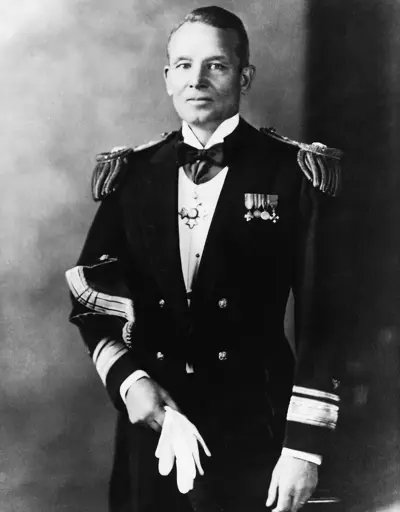
Emory Scott Land was an officer in the United States Navy, noted for his contributions to naval architecture, particularly in submarine design. Notable assignments included serving as Chief of the Navy's Bureau of Construction and Repair during the 1930s, and as Chairman of the U.S. Maritime Commission during World War II.
