Plato Quotes
If we are to keep our flock at the highest pitch of excellence, there should be as many unions of the best of both sexes, and as few of the inferior as possible, and that only the offspring of the better unions should be kept.
Plato. The Dialogues of Plato, Vol. 3. Translated by Benjamin Jowett, Clarendon Press, 1892, p. 153.


This quote was the beginning of the now discredited Eugenics movement. The essential problems were twofold: One was that someone had to decide which characteristics were desirable and undesirable, and there is wide difference of opinion that there is no way of resolving. Genocide is the result of Eugenics taken to extremes. Second, it the issue of human rights. No person, organization, or government has the right to tell a particular individual what genetic characteristics he/she may have with his/her children. Note that the issue of Population Control for size was also a part of the early Eugenics movement but is a totally separate issue. It is the voluntary verses the compulsory nature of Population control the is the critical ethical element.

Actually, while such selective breeding is possible in all animals, the selection for a single trait almost always produces other unintended and unanticipated traits and these could be devastating to the “new generation”, unpleasant, benign, or anything else. At the time selective breeding was the only possible tool to produce “desirable” traits in an animal or to eliminate what someone things of as “undesirable” traits. Today, our understanding of the human genome and genetic engineering offers a much more reliable possibility of affecting animal traits without as many risks of random and unintended consequences that are present with breeding.
The Eugenics Movement, which grew quite popular for a while, tried to improve the race of man, not by improving individual people or even a generation of people, but of selective and restrictive breeding of humans. The coercion and bias associated with it caused one of the worst violations of human rights in American History, and then was picked up by Adolf Hitler who carried the ideas to one of the worst atrocities in human history—the murder of “inferior races” so that they could not breed, thereby in their warped theory developing a super race.
He was restating the argument of the Eugenics Movement but was a critic of many parts of it. This Movement, which grew quite popular for a while, tried to improve the race of man, not by improving individual people or even a generation of people, but of selective and restrictive breeding of humans. The coercion and bias associated with it caused one of the worst violations of human rights in American History, and then was picked up by Adolf Hitler who carried the ideas to one of the worst atrocities in human history.

She was right in the sense that women’s suffrage was most successful when the women—without regard to socio economic class—were involved, as were men, many of whom were strong feminists. Opposing women’s suffrage has always been many men and a substantial number of women. Making a major change in a society takes all the help and allies on can get. See {637761} for a similar Italian view. In the final analysis, it was the men who had to vote to give women the vote, so feminist men were particularly important.
This pseudo-scientific organization, in spite of the junk science it was promulgating, actually had a substantial American following and over 20 states actually passed laws to allow forced sterilization who were “UNFIT”. In reality while there is a genetic component to each of the examples it only increases the probabilities and is not determinative. And even f it were and there were selective breeding of humans, these “TRAITS” would not be eliminated in 3 generations,
_0_thumbnail_47x47.jpg "The psychical researcher William McDougall.")
McDougall, a Harvard Professor, was active in a number of pseudo-sciences including Parapsychology and Eugenics where he developed a racist “explanation: of human talent—see Quotation 643953. His most extreme creation was that of a his proposed breeding colony of “Eugenia“ a separate protectorate within the United States, in which the best and brightest would propagate a superior stock. Eugenia would be at once a university and a stud farm. Raised as “aristocrats” in the tradition of “noblesse oblige,” (Description is that of Nancy Isenberg.) His “Utopian” colony never was implemented, but it was talked and written about amongst the “Eugenics” enthusiasts.


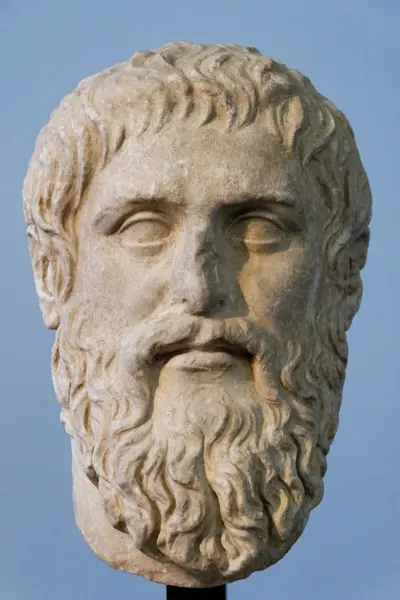
Plato (/ˈpleɪtoʊ/ PLAY-toe; Greek: Πλάτων Plátōn, pronounced [plá.tɔːn] in Classical Attic; 428/427 or 424/423 – 348/347 BC) was an Athenian philosopher during the Classical period in Ancient Greece, founder of the Platonist school of thought and the Academy, the first institution of higher learning in the Western world.
