Dennis Ross Quotes
If there is one thing that unites all Palestinian people today is their resentment of corruption.
Arab countries have been notorious in the amount and degree of societal corruption. But the Palestinian Authority which was receiving so much foreign aid was totally riddled with corruption at all levels at a level higher than most.
Dennis Ross, Assistant Secretary of State, MidEast Negotiator, Interview, The Carnegie Endowment for International Peace, April 6, 2005
Sourced by: Eigen's Political and Historical Quotations


Very often viciousness and prejudice curtails opportunity and openness to possiblilities an can exacerbate economic dislocation.


In 1927 there was a Peasant Uprising in the Hunan Province of China. Young Mau went there and wrote a report. Corruption has plagued China for millennia. As can be seen by this quotation, Mao thought that a “people’s revolution” would end corruption and despite capital punishment for corruption under the Communist government, corruption still thrived. By the 21st century corruption was common among local Communist Party Officials despite national party and government attempts to obliterate it.


Most Northerners knew little about Southern Slavery and its abject cruelty. The institution was so horrendous that most Northerners tended to think of them as aberrant, unusual occurrences. Speakers fanned out throughout the North disclosing the reality.


“Factions” was the word for political parties then.

The PLO and most of the Arab nations, took the position that the United Nations original partition of Palestine into a Jewish and a Palestinian nations -- UN General Assembly Resolution 181 – was “illegal”. That view has served as the basis for the Arab Israeli problems since. The basis of the illegality they claimed was the right of the Palestinians to self determination. However, it is a right which they deny to the Jews living in Palestine who also had a right to self determination. The UN solution was to partition the land into two nations so that the each had the right of self determination. However, the Arab leadership wanted only Arabs to have the right of self determination.
Many Irish use the term “race” in a cultural sense. To them, the Irish are a different race from the English or the Italians.


800,000 Rwandans were murdered with machetes and shovels less than 20 years before. The ethnic genocide was triggered by various hate speech in rallies and over the radio. This type of speech was made illegal in Rwanda, not unlike Germany, Turkey, Israel, Singapore, and many other solid democracies but they do not have as strong a protection of free speech as in America.

Before and while he was prime minister, he was the owner of most of the television and other media in Italy and one of the wealthiest men in that country. He was, like many politicians the world over, a womanizer, but he had a penchant for underage girls and was found guilty of not only having sex with them but sometimes paying them. He had also been convicted of tax evasion. He felt he was persecuted because in Italy, almost all the rich businessmen cheat on their taxes—it’s a national sport, and older men have been sexually exploiting young girls for centuries. So he argues that if he were not a visible conservative politician, he never would have been prosecuted for these “crimes” which were very common in Italy. He was extremely conservative on the Italian political spectrum, and most Italians were to his left, and that is true for the judges and magistrates in Italy, so there was no way that he could interact with judges / magistrates who were not more left wing than he.


The editor had discovered that she and her husband had had an affair before they were married and she was still married to another man. This would have ruined her husband’s political career and she decided to prevent that by killing the editor with the information. She was tried for murder and acquitted on the grounds that this was not a rationally premeditated murder but the uncontrollable emotional reaction of a woman who was so weak that she had no control over her actions. This was the excuse that the jury needed, as the personal slandering of politicians for things unrelated to their political activity was becoming very unpopular. This affair was the beginning of the tendency of the French media to not write about the personal and sexual activities of politicians which became a strong cultural tradition.
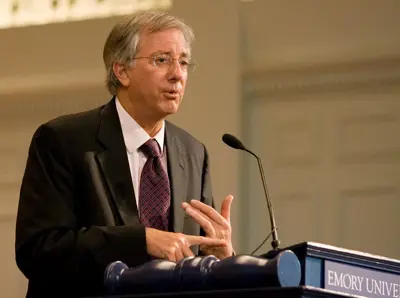
Dennis B. Ross is an American diplomat and author. He has served as the Director of Policy Planning in the State Department under President George H. W. Bush, the special Middle East coordinator under President Bill Clinton, and was a special adviser for the Persian Gulf and Southwest Asia (which includes Iran) to the former Secretary of State Hillary Clinton.
