Thomas Babington Macaulay Quotes
If the Sunday had not been observed as a day of rest during the last three centuries, I have not the slightest doubt that we should have been at this moment a poorer people and less civilized.
Macaulay, Thomas Babington. Speech on the Ten Hours Bill, 22 May 1846. Speeches of the Right Honorable T. B. Macaulay, M. P., Longman, Brown, Green, and Longmans, 1854, p. 448.


Shabbat is the Hebrew word for the Sabbath. In Israel there is conflict between ultra-orthodox Jews on the one side and secular Jews, Christians and Arabs on the other regarding store openings and closings on Saturday—the Jewish Sabbath. The orthodox want the power of the state to force stores to close on the Sabbath. The others want the freedom of the individual to either close or open a store, to shop or not to shop, to keep Friday as the Sabbath as the Muslims do, Saturday as the Jews and a few Christian sects do, or Sunday as most Christians do. This used to be a major issue in the United States. Local communities all had what were called “Blue Laws” that controlled the Sabbath. The courts however found these unconstitutional and these issues have disappeared as political issues in America.


In 1877 Wasburn was dropped from the List of Ministers by the Unitarian Church. He had become very critical of organized and orthodox religion of all kinds.


She was observing that while some autocrats try to change societies like Catherine the Great, and Kamal Attaturk, many try to maintain the traditional status quo like Franco of Spain and Kaiser Wilhelm of Germany


See {629123} for another of Emerson’s definitions of Civilization.

Paz was the Ambassador to India


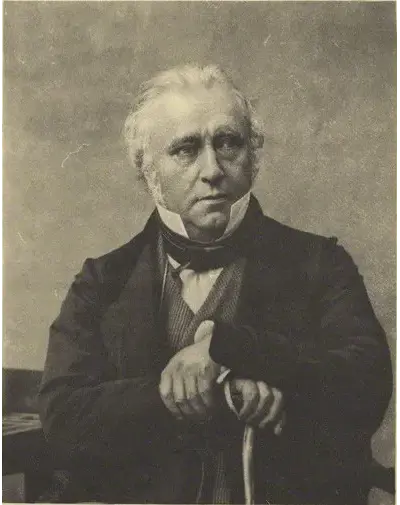
Thomas Babington Macaulay, 1st Baron Macaulay, FRS FRSE PC was a British historian and Whig politician. He wrote extensively as an essayist, on contemporary and historical sociopolitical subjects, and as a reviewer. His The History of England was a seminal and paradigmatic example of Whig historiography, and its literary style has remained an object of praise since its publication, including subsequent to the widespread condemnation of its historical contentions which became popular in the 20th century.
