Michelangelo Antonioni Quotes
I meant exactly what I said: that we are saddled with a culture that hasn't advanced as far as science.
Samuels, Charles Thomas. Encountering Directors. G.P. Putnam's Sons, 1972.


Explaining the difficulty of lobbying for controls on science and technology:


This was a radical speech for the time, suggesting reforms that had been unthinkable to most Turks. Although it is not prohibited by the Koran and early Islamic artists made some of the greatest paintings and depictions of people, fundamentalists gained control of Islam and interpreted any statue as an idol that could be worshipped and this generalized to Islamic art in general where people ceased to be depicted and even animal depictions were rare. Muslim art developed incredible geometric intricacy but tended not to depict anything that is real. This extended to photography and illustrations in books including textbooks. At the same time, not unlike some Christian and Jewish Fundamentalists, the Muslim fundamentalists opposed science and the teaching thereof on the grounds that all authentic knowledge was in the Koran and anything else was not only false but also heretical. So this speech was a type of “declaration of war” against the established religious order and culture.


The employees, almost all scientists, are evaluated based on their answers which the employees keep a daily record of.
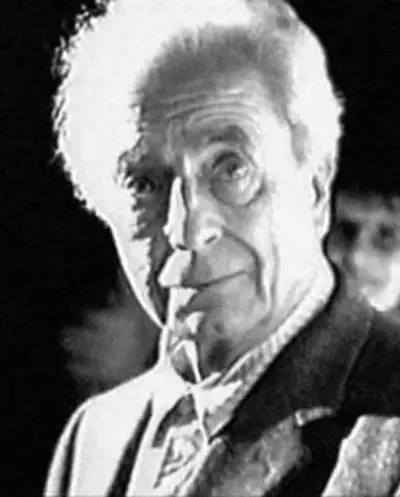
Michelangelo Antonioni Cavaliere di Gran Croce OMRI was an Italian film director, screenwriter, editor, painter, and short story author. He is best known for his "trilogy on modernity and its discontents" — L'Avventura (1960), La Notte (1961), and L'Eclisse (1962) — as well as the English-language films Blowup (1966) and The Passenger (1975). His films have been described as "enigmatic and intricate mood pieces" that feature elusive plots, striking visual composition, and a preoccupation with modern landscapes. His work would substantially influence subsequent art cinema.
