Robert H. Jackson Quotes
If the prosecutor is obliged to choose his cases, it follows that he can choose his defendants. Therein is the most dangerous power of the prosecutor: that he will pick people that he thinks he should get, rather than pick cases that need to be prosecuted. With the law books filled with a great assortment of crimes, a prosecutor stands a fair chance of finding at least a technical violation of some act on the part of almost anyone. In such a case, it is not a question of discovering the commission of a crime and then looking for the man who has committed it, it is a question of picking the man and then searching the law books, or putting investigators to work, to pin some offense on him. It is in this realm—in which the prosecutor picks some person whom he dislikes or desires to embarrass, or selects some group of unpopular persons and then looks for an offense, that the greatest danger of abuse of prosecuting power lies. It is here that law enforcement becomes personal, and the real crime becomes that of being unpopular with the predominant or governing group, being attached to the wrong political views, or being personally obnoxious to or in the way of the prosecutor himself.


This statement was an extension of the famous quotation of Oliver Wendell Holmes Jr. {603715}.
He had been fired by the George W. Bush White House because he would not rush an indictment against a democratic politician to make the newspapers before the election that year. Unfortunately, many prosecutors will file a questionable case without sufficient evidence for a conviction. They get the newspaper headlines and TV coverage when they file the indictment, and little negative press when they person is found not guilty months or years later. The best prosecutors never will allow politics to influence their prosecution decisions, but there are still many who do.

Many like Black were concerned that prosecutors had the power to decide who would be charged, with what crimes, what penalties to ask for, and even able to start or end investigations of private citizens and politicians. By overcharging they are able, if they choose, to intimidate many people into pleading guilty, even for crimes that the never committed, in order to avoid taking a chance and possible have a very long jail sentence. Thus they were the most powerful people in the legal system, and had more power and less accountability, checks and balances of any public figures except perhaps for Federal Judges.


Prosecutors, even ones who are frequent lawbreakers themselves violating defendant's rights or illegally manipulating trials, are reluctant to be officially found to have done so. Many politicians start their political careers as prosecutors and then rise to higher office. If it is officially found that they had abused a defendant and violated the law, it can be detrimental to their careers. So in many states, they have placed barriers making it much harder for an improperly convicted person to even get a court hearing. The cost to society however is that they are never accountable, and people have been wrongly imprisoned and cannot even get a hearing to prove that they were the victims of official misconduct. The rationale for these rules that prevent victims from obtaining fairness and justice is finality—the concept that there should be some end to the process of appeals so justice can be said to have been done. It prevents a kind of closure for many of the victims of crimes and their families if the guilty perpetrator is constantly appealing or can do so.

The “thieves” won in the sense that TR was the choice of the vast majority of the Republican voters of the time, yet the party bosses manipulated the convention to deny Roosevelt the nomination. Taft was nominated, and Roosevelt ran on the Bull Moose Party and outpolled Taft, but they split the Republican vote and lost to Democrat Woodrow Wilson.

Explaining why his Justice Department was arguing in court that abortion protestors who interfere with abortion clinics could be criminally prosecuted. As a rabid abortion opponent, anti-choice people expected him to side with the violent protesters.


A few years later Mitchell himself was convicted and sent to prison.
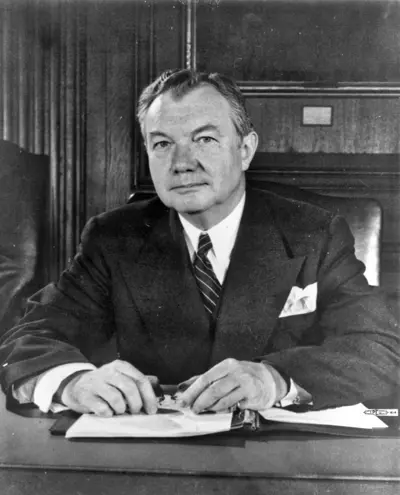
Robert Houghwout Jackson was an American attorney and judge who served as an Associate Justice of the United States Supreme Court. He had previously served as United States Solicitor General and United States Attorney General, and is the only person to have held all three of those offices. Jackson was also notable for his work as Chief United States Prosecutor at the Nuremberg trials of Nazi war criminals following World War II.
