Alfred Rosenberg Quotes
If the distinction provided by Jesus' words: Give unto god, what is god's, and unto Caesar what is Caesar's! is carried through, then other necessary intrusions by the national state into the domain of church creeds can be completely avoided.
Rosenberg, Alfred. The Myth of the Twentieth Century: An Evaluation of the Spiritual-Intellectual Confrontation of Our Age. Translated by Vivian Bird, Noontide Press, 1982, p. 140.


Backus was the first of the American clerics to espouse the position that in order for there to be a Christian nation, the state must be separate from the Church.

Carroll was writing to Troy during the time of the question of Catholic emancipation in England. Here he is clearly alluding to the British form of government. Carroll never missed the opportunity to champion religious freedom as manifested in the U.S. Constitution. For an earlier example of his praise for religious freedom, see {596933}.

At the time Kaunitz was a young lawyer and diplomat who had abandoned the church career that his parents had hoped for him.

While the Visigoths had some very advanced legal principles, this law, quoted in its entirety is typical of the nations that were part of the Catholic world. The church and its doctrines were immune from any possible criticism, explicit or implicit. This is the most formalized and sophisticated compendium of laws of the so-called “barbaric peoples” of Europe. The compilation was in many ways a documentation of the traditional laws of the Visigoths that had evolved over hundreds of years.


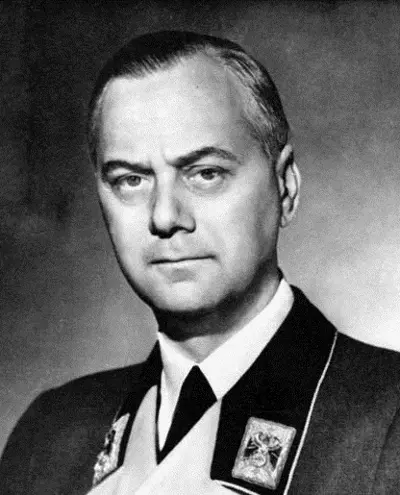
Alfred Ernst Rosenberg was a Baltic German Nazi theorist and ideologue. Rosenberg was first introduced to Adolf Hitler by Dietrich Eckart and held several important posts in the Nazi government. He was the head of the NSDAP Office of Foreign Affairs during the entire rule of Nazi Germany (1933–1945), and led Amt Rosenberg ("Rosenberg's bureau"), an official Nazi body for cultural policy and surveillance, between 1934 and 1945. During World War II, Rosenberg was the head of the Reich Ministry for the Occupied Eastern Territories (1941–1945). After the war, he was convicted of crimes against peace; planning, initiating and waging wars of aggression; war crimes; and crimes against humanity at the Nuremberg trials in 1946. He was sentenced to death and executed on 16 October 1946.
