Ruhollah Khomeini Quotes
If one permits an infidel to continue in his role as a corrupter of the earth, his moral suffering will be all the worse. If one kills the infidel, and this stops him from perpetrating his misdeeds, his death will be a blessing to him.
This quotation which is so shocking to most people is classic amongst many religious fundamentalists. They regard infidels and blasphemers as so evil, that in their view it is doing the evil person a favor to kill him. While in the 21st century, most people believe that his view is that of fundamentalist Muslims, it is also the view of some fundamentalist Christians who cite the Biblical call for the death penalty for blasphemers. The difference is that there are very few Christians who believe that today, while there are many Muslims who do. However, in the past, this was a common view amongst Christians. The Inquisition of the Roman Catholic Church held this view and it even prevailed into the early 20th century where Spain continued to execute heretics.
Ruhollah Khomeini, 1900-1989, Iranian Cleric (Ayatollah) & Revolutionary Leader, View of the proper treatment of an infidel
Sourced by: Eigen's Political and Historical Quotations

Essentially such a rigid conviction of unbelievers was common with both Protestants and Catholics in the middle of the second millennium, but Christian theology evolved and forgiveness and repentance became major factors. Islam did not so modernize so even in the 21st century a disbeliever deserved nothing from Muslims because Allah would never forgive them and they would be consigned to hell. So this Sura and {584363} made fundamentalist Muslim terrorists particularly willing to kill non-believers.


In contemporary American terms this notion is usually couched in terms of all consumers paying higher prices because of credit card frauds, or all airline travelers must submit to searches because of the terrorists.
Gordon himself was killed shortly thereafter by the Madhi’s followers at the siege of Khartoum. Ahmed died soon thereafter. Although Ahmed was an extreme religious fanatic, and a skillful leader, he was not a terrorist.
Martyrs to most Muslims are people who die when defending Islam, which includes under the definitions of the Muslim Fundamentalists murdering innocent civilians including women and children. In addition to ascending directly to heaven, the male martyr gets 72 virgins in Paradise.


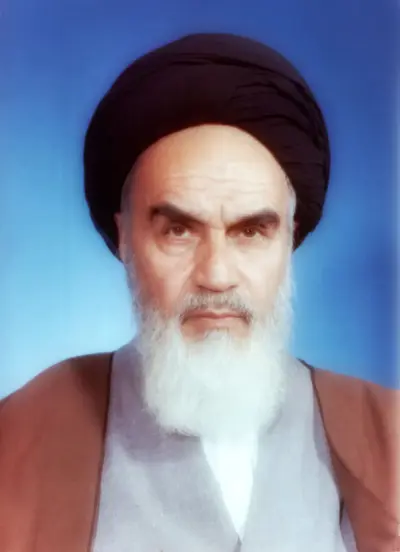
Sayyid Ruhollah Musavi Khomeini, also known in the Western world as Ayatollah Khomeini, was an Iranian political and religious leader. He was the founder of the Islamic Republic of Iran and the leader of the 1979 Iranian Revolution, which saw the overthrow of the last Shah of Iran, Mohammad Reza Pahlavi, and the end of the 2,500-year-old Persian monarchy. Following the revolution, Khomeini became the country's Supreme Leader, a position created in the constitution of the Islamic Republic as the highest-ranking political and religious authority of the nation, which he held until his death. Most of his reign was taken up by the Iran–Iraq War of 1980–1988. He was succeeded by Ali Khamenei on 4 June 1989.
