John C. Calhoun Quotes
If not met promptly and decidedly, the two portions of the Union will gradually become thoroughly alienated, when no alternative will be left to us, as the weaker of the two, but to sever all political ties or sink down into abject submission.
Calhoun, John C. The Works of John C. Calhoun. Edited by Richard K. Crallé, vol. 3, D. Appleton and Company, 1853.

Fortunately he was wrong, but the threat of a breakup of the American Union intimidated most members of Congress to avoid anything that would offend a state or group of states. Thus slavery became more and more entrenched till it exploded into the Civil War. At the time the issues of contention included the fact that Louisiana was primarily Roman Catholic and ALL other states were majority Protestant. The territory functioned under French Law—the Napoleonic Code, while all the other states operated under the English Common Law (even today this is so), and there was concern with the French and Creole language and whether the Creoles would fit into American Culture.


It would be almost 30 years until Jackson would have been proved correct and the Civil War had begun.


Later that year he sent federal troops to Little Rock, Arkansas to enforce a desegregation order.

This quotation is very important in that this is the first record that Lincoln had any doubts that he might not be able to preserve the Union.
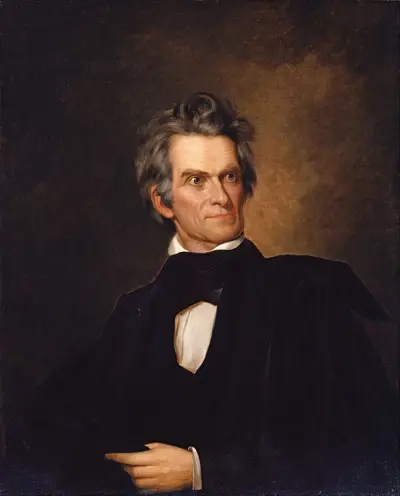
John Caldwell Calhoun was an American politician and political theorist from South Carolina who held many important positions including being the seventh vice president of the United States from 1825 to 1832, while adamantly defending slavery and protecting the interests of the white South when its residents were outnumbered by Northerners. He began his political career as a nationalist, modernizer, and proponent of a strong national government and protective tariffs. In the late 1820s, his views changed radically, and he became a leading proponent of states' rights, limited government, nullification, and opposition to high tariffs. He saw Northern acceptance of those policies as a condition of the South remaining in the Union. His beliefs and warnings heavily influenced the South's secession from the Union in 1860–1861.
