Alan Guth Quotes
If laws are just properties of objects, how can those laws continue to operate when the object is not really there?
Guth, Alan. Interview. Closer to Truth, PBS, 2014.


On the Fugitive Slave Act: As one of the leading American Catholic intellectuals during the 19th Century, Brownson’s opinions went far in keeping Catholics from joining the side of the abolitionists. However, just a few years later his tone would change and he would become one of the few Catholic writers to refuse to defend slavery, see {610710}. While the majority of Catholics refused to join the abolition movement, they often did so because abolitionism was closely tied to anti-Catholicism, see Gordon {611392} or Shaftesbury {611106}. Other reasons included Irish immigrants fearful of competition from Black labor and the fear of liberal individualism and social disorder, which was prevalent in 19th century Catholic thought. For a further explanation on the relationship between American Catholics and slavery, see McGreevy {612036}.


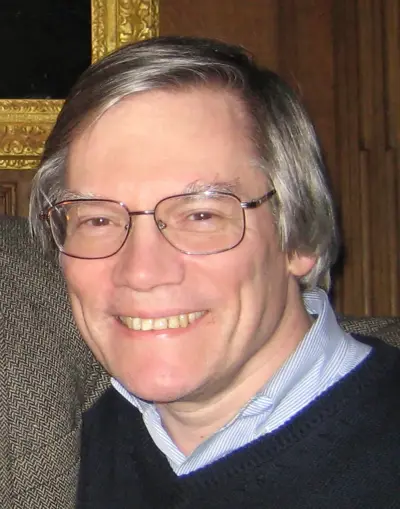
Alan Harvey Guth is an American theoretical physicist and cosmologist. Guth has researched elementary particle theory (and how particle theory is applicable to the early universe). He is Victor Weisskopf Professor of Physics at the Massachusetts Institute of Technology. Along with Alexei Starobinsky and Andrei Linde, he won the 2014 Kavli Prize "for pioneering the theory of cosmic inflation."
