Preston Brooks Quotes
If I desired to kill the senator why did I not do it? You all admit that I had him in my power.
Brooks, Preston S. "Personal Explanation—Speech of Hon. P. S. Brooks, of South Carolina, in the House of Representatives, July 14, 1856." Appendix to the Congressional Globe, 34th Congress, 1st Session, John C. Rives, 1856, p. 832.


It was common then for people to die in tenements as a result of shoddy construction, poisoning by sewer gas, and unsanitary conditions. As the result of the efforts of reformers like Riis and Theodore Roosevelt health inspectors were appointed and errant builders went to jail—in some cases for manslaughter.


Description of one of his experiences in the Spanish American War.


This proverb only makes sense in the light of understanding the Arab concept of revenge—“blood.” In a rural desert environment where little can be expected of government, the Arabs have developed a law enforcement and peace keeping mechanism which while primitive from modern standards, nevertheless worked to some degree. It is that revenge—“blood” is a moral necessity and obligation of all people, and revenge is not limited by time or to the individuals involved in the first incidence. The immediate family are the first to extract revenge, but the extended family follows and often the entire clan. Sometimes revenge is tribal or even national. Anyone who fails to revenge a member in his group is not only a disgrace, but is a clear and present danger to the group because then they can be attacked with impunity. So revenge is a strong obligation of the group members and blood must be paid with blood no matter how many generations it may take. The only thing that keeps me and my family safe, is the surety what whosoever kills one of us will themselves be killed or if they die a natural death we will take revenge on one of the evildoers relatives. Crime must never pay!

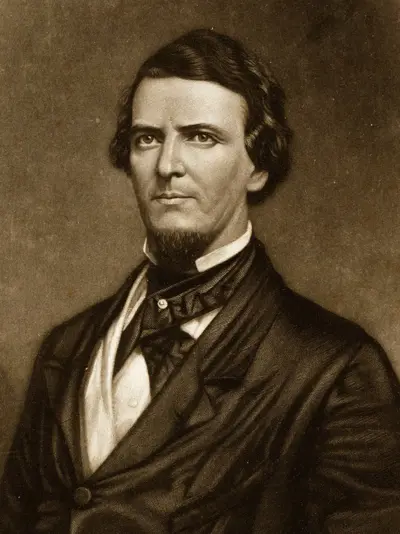
Preston Smith Brooks was an American politician and Member of the U.S. House of Representatives from South Carolina, serving from 1853 until his resignation in July 1856 and again from August 1856 until his death.
