Algernon Sidney Quotes
If his Majesty is resolved to have my head, he may make a whistle of my arse if he pleases.
Burnet, Gilbert. Bishop Burnet's History of His Own Time. Vol. 2, Oxford UP, 1833, p. 407.


Bailey became a lifelong enemy of the President’s as a result of this statement.


The actress was in Jordan and was requested for a command performance before King Hussein. She was told to curtsey when she was introduced to the King.


The “stake” refers to burning at the stake, one of the methods of murder used in the South to intimidate Negroes and whites who might hold anti-slavery sentiments.

The fire turned out to be The Great Fire of London which burned most of the city to the ground. Bludworth’s inaction and indecision are blamed as one of the reasons the fire got out of control.
Dwight D. Eisenhower had become President of Columbia University. At one of his first meetings with the Faculty Senate, Eisenhower in response to a question stated that the University could not countenance such a policy. At this point, Professor Highit, the Dean of the Faculty Senate, interrupted Eisenhower with this legendary quotation. At Columbia as well as many other of the best private universities, it is the faculty Senate that is the highest educational policy making organ. See {634253} for one of the origins of this. Eisenhower and the University were both great but they were a bad fit. Some historians believe that it was the bad experience at Columbia that brought Eisenhower into Presidential politics. If he had been successful at Columbia, he might have stayed there for his career.


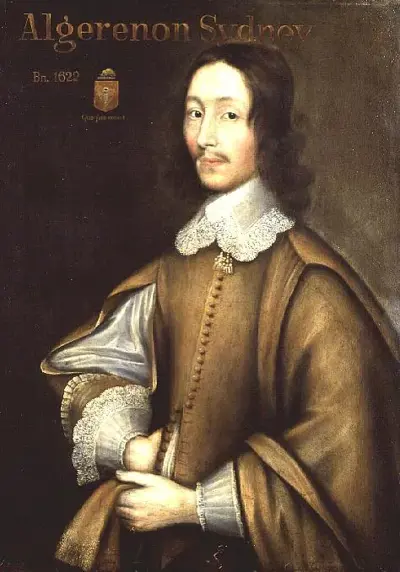
Algernon Sidney or Sydney was an English politician and member of the middle part of the Long Parliament. A republican political theorist, colonel, and commissioner of the trial of King Charles I of England, he opposed the king's execution. Sidney was later charged with plotting against Charles II, in part based on his most famous work, Discourses Concerning Government, which was used by the prosecution as a witness at his trial. He was executed for treason. After his death, Sidney was revered as a "Whig patriot–hero and martyr".
