Nicholas Biddle Quotes
If any person employed in the General Post Office embezzles or secretes the smallest amount of property confided in him he may be publicly whipped and imprisoned for ten years—whilst the officer of a Bank in which the revenue of the U. S. is deposited ... may defraud the institution of millions and escape the criminal law of the United States
Nicholas Biddle, 1786-1844, Head of the Bank of the United States, Letter to James Monroe, July 5, 1819
Sourced by: Eigen's Political and Historical Quotations

Commenting on the 1989 savings and loan scandal:

In the Great Recession thousands of bank executives of the banks that received government bailouts committed fraud and perjury providing false information under oath and foreclosing on mortgages illegally. There were so many bank felons that the Justice Department decided not to prosecute any of them and let the Banks pay relatively small fines instead. Then the banks paid the crooked employees bonuses. Paul was one of the few members of Congress who favored prosecution of all the guilty bankers regardless of the number.


At the fall of the Soviet Union, the sell off of much of the state assets to private enterprise fell into the control of a few, so called oligarchs. Many of these looted the enterprises that they controlled. None the less, they were considered leading citizens and many were politicians.


The Register was one of the most widely circulated journals of early America and Niles one of the most popular and influential journalists. Banks at the time could print their own paper money—unregulated by anyone. Often then did so knowing full well that if all the paper money they issued were presented for redemption they could not possible pay, as there was by the resolution of the bank directors not enough gold and silver to redeem all the money. Although few national leaders approved of the practice, it would have then been unthinkable and considered unconstitutional for the Federal government to interfere with a private bank’s right to print money or issue promissory notes regardless of the backing. See John Adams {615650} for a similar view.


He said this as he threw them out of his White House office.
Actually a few minor characters were prosecuted for financial crimes committed during that period but none were prosecuted whose behavior caused or accelerated the meltdown, and no bank officers were prosecuted despite the FBI reporting that hundreds of thousands of Mortgage Foreclosure involved perjury by bank officers in a pattern that was used by most of the large major banks. The Obama administration was in the dilemma of either choosing one or two bank officers of whom to make an example or if all those who had committed serious crimes were prosecutors, it would involve thousands of the officers of almost every major bank and tens of thousands of officials and mortgage related firms. These were among the wealthiest and most influential people in the country, and there would be few left to build the American Banking System back up when that was one of our most important national priorities. They were also amongst the largest political contributors to both political parties. So the government bailed the bankers out financially, allowed them to maintain million dollar of more salaries and bonuses, and gave the entire batch of people who broke the law a de facto immunity from criminal prosecution. A further complicating factor was that many of the most egregious, greedy, and publicly harmful were not illegal as a result of much change in the law as a part of financial deregulation or were new schemes that the financial industry had successfully lobbied to prevent regulation as with Derivatives.

In the economic meltdown of 2008 and the aftermath, there were so many criminal violations of law in the financial industry that even the Democratic administration of Barack Obama chose not to jail the violators but to levy some large token fines albeit ones which were very affordable for the institutions who had to pay them—in many cases paying them with money made as a result of profits on no-interest money they received in bailouts after the 2008 Meltdown.

Greenspan was not the amoral fool that this quotation makes him seem. Despite the fact that he was the most important financial officer of the country, he had an ideological faith that a free market was self-corrective in a democracy. The financial industry would police itself he believed. He also trusted the self interest of the financial corporations to restrain them from getting too greedy -- {637989}. He and many others were wrong and most Americans paid the price.


In the quoted passage, it describes Diogenes as observing a thief being arrested in one of the religious temples by the officials of the temple. He had pilfered one of the temple treasures. Not unlike modern times, most religious organizations raised money be getting donations from the public. Some of the means of many of the religious groups are and have been of dubious morality and if used in commerce would generally be considered fraud. This quotation shows that this is not a new phenomenon nor was it limited to monotheistic religions.


In the Savings & Loan crises there were under 1000 bankers and others who had committed crimes, In the Meltdown of 2008, there were tens of thousands of criminals. Almost everyone connected with home mortgages broke the law, and all of the major banks in America had officers at the highest levels who committed perjury and fraud regarding foreclosure of mortgages. The biggest fish were involved as well as many thousands of others. Wall Street and the financial industry spend many millions in lobbying and campaign donations to be sure that there would be very few prosecutions and even then no major financial leaders would be called to account in a criminal court. The FBI had identified MILLIONS of cases of perjury and fraud in bank forclosures alone.

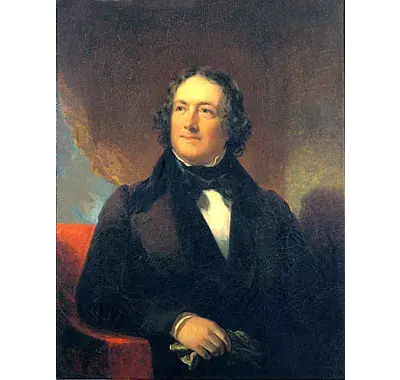
Nicholas Biddle was an American financier who served as the third and last president of the Second Bank of the United States (chartered 1816–1836). He also served in the Pennsylvania General Assembly. He is best known for his role in the Bank War.
