Book of Mark Quotes

See Mark {606304}; also Matthew {606727}. Lincoln had used the “house divided” biblical metaphor in 1843 when arguing for Whig solidarity. The first political use of the Biblical metaphor and quotation with respect to American slavery appears to have been by Sam Houston in 1850 {603970}. The first use with respect to American slavery was byMassachusetts abolitionist, Edmund Quincy, in 1852. The second sentence of this famous quotation was forsaged earlier. See Lincoln, {619494} & {584918}. Also See Felix Rohatyn who used the Lincoln line to refer to poverty: {70611}.

Compare Mark 3:25, above, and Abraham Lincoln's use of the phrase in one of his most famous speeches.

This is a variant of the famous Lincoln quotation, {619494}. Houston did not use the word “house” as had Lincoln but surely, as did Lincoln, was familiar with The Book of Mathew {606727}. Houston however gave his speech BEFORE Lincoln.


Characterizing democratically elected Guatemala President Jacobo Arbenz Guzman:


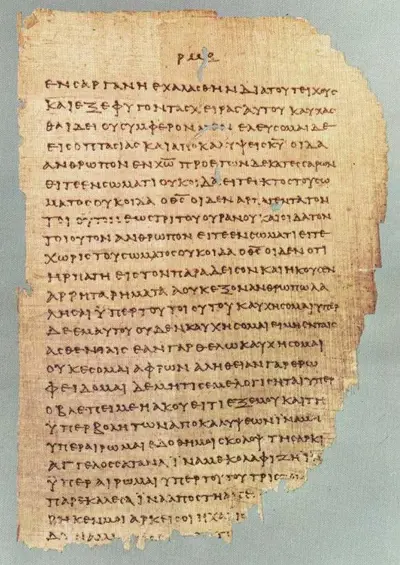
The Gospel according to Mark (Greek: Εὐαγγέλιον κατὰ Μᾶρκον, romanized: Euangélion katà Mârkon), also called the Gospel of Mark, or simply Mark, is the second of the four canonical gospels and of the three synoptic Gospels. It tells of the ministry of Jesus from his baptism by John the Baptist to his death and burial and the discovery of Jesus' empty tomb. There is no miraculous birth or doctrine of divine pre-existence, nor, in the original ending (Mark 16:1-8), any post-resurrection appearances of Jesus. It portrays Jesus as a heroic man of action, an exorcist, a healer, and a miracle worker. He is also the Son of God, but keeps his messianic nature secret, with even his disciples failing to understand him. All this is in keeping with prophecy, which foretold the fate of the messiah as suffering servant. The gospel ends, in its original version, with the discovery of the empty tomb, a promise to meet again in Galilee, and an unheeded instruction to spread the good news of the Resurrection of Jesus.
