Mark Twain Quotes
I wonder if God created man because He was disappointed with the monkey.
Twain, Mark. Mark Twain's Autobiography. Harper & Brothers, 1924.


This quotation is noteworthy because although there are some scientists who are sympathetic to the religious fundamentalist view of the origin of the universe, they are almost always second class scientists. In this case, the scientist is a first class scientist, a Nobel Prize winner in Chemistry. So his quotation has more weight than of most others and is used more often by many fundamentalists who support the Biblical Genesis version of creation rather than the Big Bang scientific explanations and evolution. There are however many great scientists who also are people of faith in a God. They may be religious, but like most religious Americans, interpret the Bible metaphorically and symbolically rather than literally as the fundamentalists do.


India had become a nuclear power.


This is a very good quotation showing the point of view of religious fundamentalists that if there is no fixed statement of ethics and morality as with the word of God as revealed in the Bible, what then makes anything right or wrong and the world exists in a moral behavioral vacuum. Other religionists hold that the morality is in the metaphors and philosophy of religion and not in the literal words of scripture. Still others argue that morality and religion itself is dynamic and is constantly changing. Then there are those who build their view of morality on philosophy but which is not based on a deity—Ethical Culturalists for example {592791}. Also, there are the pragmatic evolutionists who argue that cooperative behavior has evolved in man and cultural rules—morality—is also transmitted by culture and systems of law.
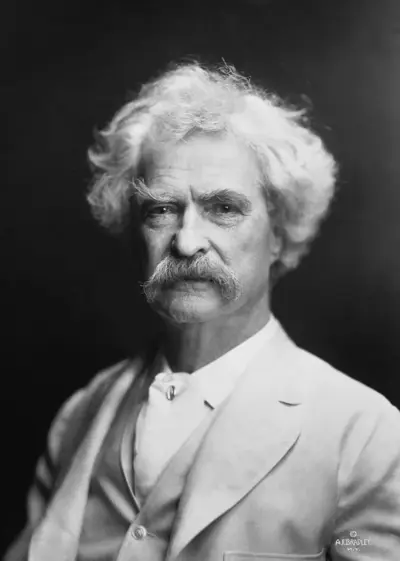
Samuel Langhorne Clemens, known by his pen name Mark Twain, was an American writer, humorist, entrepreneur, publisher, and lecturer. He was lauded as the "greatest humorist the United States has produced," and William Faulkner called him "the father of American literature". His novels include The Adventures of Tom Sawyer (1876) and its sequel, the Adventures of Huckleberry Finn (1884), the latter often called "The Great American Novel".
