Richard Smalley Quotes
The burden of proof is on those who don't believe that "Genesis" was right, and there was a creation, and that Creator is still involved.
This quotation is noteworthy because although there are some scientists who are sympathetic to the religious fundamentalist view of the origin of the universe, they are almost always second class scientists. In this case, the scientist is a first class scientist, a Nobel Prize winner in Chemistry. So his quotation has more weight than of most others and is used more often by many fundamentalists who support the Biblical Genesis version of creation rather than the Big Bang scientific explanations and evolution. There are however many great scientists who also are people of faith in a God. They may be religious, but like most religious Americans, interpret the Bible metaphorically and symbolically rather than literally as the fundamentalists do.
Richard Smalley, 1943–2005, Nobel Laureate in Chemistry, Address at the Tuskegee University, October 2004
Sourced by: Eigen's Political and Historical Quotations


At the time, it was very difficult for people who had been taught all their lives that God was directly responsible for the creation to accept the notion of evolution. At the time, there was not the overwhelming evidence proving Darwin’s theory that we have today. Nor did theologians realize that evolution and Darwinism were not inconsistent with the concept of a creator and supreme being. Nonetheless, there are still those who, like Agassiz, reject evolution and insist that the Biblical version of creation is literally true. See {586990}. Then there are people who have come up with the concept of Intelligent Design which originated with Agassiz though he never called it that. Most religious people today, in contrast, see no conflict in natural selection as described by Darwin and later proven, and the concept of God. They see the Biblical creation as metaphorical and natural selection as the product of an omniscient supreme being.


Watchtower Bible and Tract Society of New York


In the middle of the 19th century, there was an Anglican English Bishop by the name of Usher who was the first person to perform this “Biblical” analysis. Even then the absurdity of this claim was demonstrated over and over again with the science of the time. Most religious fundamentalists believe that the word “day” was really an unspecified period of time which might have been billions of years. Other religious theologians argue that the entire Genesis story was a metaphor and not meant to be taken literally. Today we know that our universe is over 18 billion years old, and the overwhelming proportions of the different animals and other life forms that have existed are long since extinct, while a few, like horseshoe crabs, are many millions of years old. New species are being created constantly. Even man, one of the more recent life forms, was well developed, had communities, and had spread over the world more than 6,000 years ago. We have archeological evidence of human life that goes back 10s of thousands of years. None-the-less, there are a number of American citizens who actually believe the 6,000 year claim, and they are entitled to their opinion regardless of how absurd it may seem to others. That is the great strength of a liberal democracy. Absurd seeming beliefs must be protected and respected. However, views that are so variant from known scientific reality may not be allowed to interfere with the teaching and public education to advocate a particular theological view and especially under the rubric of science.
The Creation Museum makes the Christian Fundamentalist Case for their alternative view of the creation of the earth and man. In the process, they make claims that are proven incorrect every day in science, like the earth is only about 6000 years old {641849} , and all the species on earth were then separately created in their immutable form with no evolutionary process. There are many deeply religious Christians who do not take the Bible literally and have no problem with evolution as the mechanism which God selected to create and develop life. The Roman Catholic Church, for example, does not maintain that the Bible is literally true and Evolution did not account for the development of life on earth. The major difference between most modern scientists, philosophers, and theologians, is that some believe that God of other Supreme Being had nothing to do with the evolution and development of life forms and those who believe that Evolution was the mechanism that God created and used. See {641848} for an example of the former.

This quotation is important and memorable for several reasons. First, the Congressman is one of the relatively few highly educated Americans who believe in the literal interpretation of the Bible. Most Christians and Jews do not interpret the ancient scripture literally. Most Christian and Jewish religious organizations, including the Roman Catholic Church, have no problem at all with evolution and the big bang theory. As a matter of fact, the scientist who developed the mathematics to explain the big bang was a Catholic Priest. Even some religious people who do not believe that that evolution is not an accurate interpretation, rarely claim that the Earth is only 9,000 years old. It is actually over 13 Billion years old. An anti-scientific view of the world is certainly within an American’s right, but the fact that this congressman was assigned by The Republican Party leadership to be a Member of the House Committee on Science, Space and Technology given his belief structure is amazing, If the earth were only 9,000 years old, there is no way the global positioning satellites could tell us where we are, our nuclear arsenal would be unstable and dangerous, radiation medicine would not help anyone get well just for a few examples. A second noteworthy aspect is that the Congressman is not just stating that the millions of scientists and science teachers are wrong—in error. He accuses each and every one of them of acting as agents of Satan and that their motivation in studying and doing science is to undermine his and others faith in God and that none of them has any belief in or desire for a personal Savior. It is rare that this type of un-American behavior is found in a member of Congress who claims that any person who disagrees with his religions views or has different Biblical interpretations is an agent from Hell. The founding fathers created the First Amendment to cope with and even tolerate the few who had the extreme and unrealistic views of this Congressmen.
This is a very good quotation showing the point of view of religious fundamentalists that if there is no fixed statement of ethics and morality as with the word of God as revealed in the Bible, what then makes anything right or wrong and the world exists in a moral behavioral vacuum. Other religionists hold that the morality is in the metaphors and philosophy of religion and not in the literal words of scripture. Still others argue that morality and religion itself is dynamic and is constantly changing. Then there are those who build their view of morality on philosophy but which is not based on a deity—Ethical Culturalists for example {592791}. Also, there are the pragmatic evolutionists who argue that cooperative behavior has evolved in man and cultural rules—morality—is also transmitted by culture and systems of law.


The religious theology of the Church of England had accepted the fact based on Newton’s work, that the heavenly bodies followed a set of scientific laws that were themselves created by God. However, the Church could not accept the same principle when it came to the different species of humans and lower order animals. Each species they believe was created with all its characteristics by God directly and species could not change, develop, regress, go extinct unless God specifically ordained that. It was this inconsistency that Darwin was afraid would produce religious attacks on him and his notions of natural selection while astronomy and physics was treated very different theologically. Darwin delayed publishing his findings for 25 years hoping to find a religious atmosphere that would treat biology much as physics and astronomy. It didn’t come and finally he published and took the heat, which actually was not very great. With the exception of some religious fundamentalists, most other elements of society welcomed and supported Darwin’s ideas which today we realize were among the most important ever put forth in the world of science.
Darwin who had a Protestant Christian upbringing, never precluded the possibility that God had created the universe with the Laws of Evolution and that was the mechanism He selected to allow all the species and diversity of life to develop. But he did not say that explicitly. While he found immediate acceptance and accolades from the scientific communities throughout the world, and enthusiastic approval by most educated people with the exception of theologians and clerics. Their reaction was extreme—almost apoplectic. The book as a best seller and they sold out with each successive printing. In the 6th edition, Darwin not only was explicit about the role the Deity might have had, but Darwin stated that he personally believed that He was the impetus to the creative process. Ironically, almost all the social and political opponents of Evolution have never read Darwin’s work (or much else on the subject) and certainly do not realize that the man they accuse of leaving God out of the Creation, actually believed that God was the critical element and he and other evolutionary scientists were just discovering God’s laws. Dr. Huxley and some other supporters of Darwin were disappointed with this change in the 6th edition, as they were atheists and believed that there was no deity involved in the creation. Today, there are evolutionary scientists who are on both sides of the issue. They just disagree on this point, but they work together on everything else.

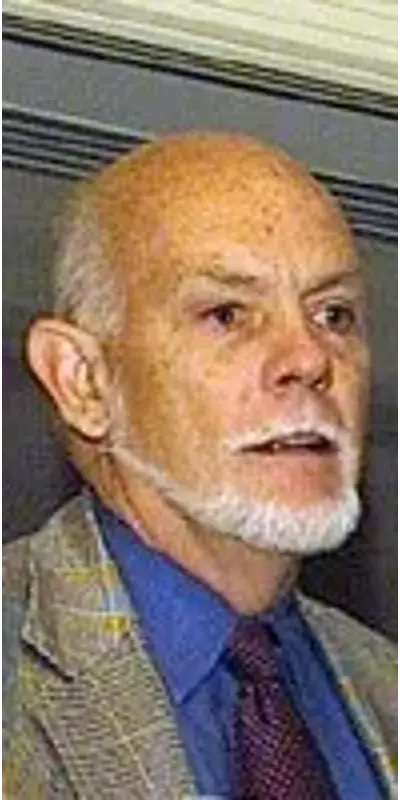
Richard Errett Smalley was the Gene and Norman Hackerman Professor of Chemistry and a Professor of Physics and Astronomy at Rice University. In 1996, along with Robert Curl, also a professor of chemistry at Rice, and Harold Kroto, a professor at the University of Sussex, he was awarded the Nobel Prize in Chemistry for the discovery of a new form of carbon, buckminsterfullerene, also known as buckyballs. He was an advocate of nanotechnology and its applications.
