Simin Daneshvar Quotes
I wish the world was run by women. Women who have given birth and know the value of their creation.
Daneshvar, Simin. Savushun. Translated by M.R. Ghanoonparvar, Mage Publishers, 1990, p. 194.

Most modern feminists would not agree with this quotation by one of the great early femonists.


This 12th century observation which appears so obvious has been ignored by the vast majority of Islamic scholars and writers subsequent until modern times, and even then they represent the small reform minority of Islamic thinking.


Jinnah was a modern Islamist who saw the role of females in a modern context. He, like the Indian Hindu leaders were in a sense products of the West and Western government and education. He would be very surprised that in his Pakistan men can murder their female relatives who they believe have dishonored the family, or that women would not be educated in the Madrassas, or that authorities could sentence a female relative of a man deemed guilty of seduction to be gang raped, but that is what happens in modern Pakistan. Jinnah and many of the early leaders believed that their new government could modernize Islam but the control and influence went the other way. Pakistan became a religiously dominated autocracy rather than the democracy that Jinnah foresaw.


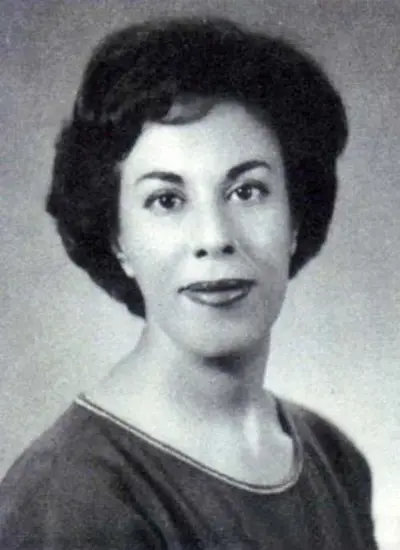
Simin Dāneshvar (Persian: سیمین دانشور) was an Iranian academic, novelist, fiction writer and translator. She was largely regarded as the first major Iranian woman novelist. Her books dealt with the lives of ordinary Iranians, especially those of women, especially through the lens of recent political and social events in Iran at the time. Daneshvar had a number of firsts to her credit; in 1948, her collection of Persian short stories was the first by an Iranian woman to be published. The first novel by an Iranian woman was her Savushun ("Mourners of Siyâvash", also known as A Persian Requiem, 1966), which went on to become a bestseller. Daneshvar's Playhouse, a collection of five stories and two autobiographical pieces, is the first volume of translated stories by an Iranian woman author. Being the wife of the famous iran writer Jalal al-Ahmad she had a profound influence on his writing, she wrote the book "the Dawn of Jalal" in memory of her husband. Daneshvar was also a renowned translator, a few of her translations were "The Cherry Orchard" by Anton Chekhov and "The Scarlet Letter" by Nathaniel Hawthorne. Her last book is currently lost and was supposed to be the last book of her trilogy which started with "the lost island". Al-Ahmad and Daneshvar never had a child.
