Antonio Jose de Sucre Quotes
I will accept for two years only.
This is one of the first examples of term limits. Sucre, one of the idealistic patriotic liberators of South America from the Spanish, did not even want to accept the presidency, but was persuaded that to refuse would be considered an insult to the proud South Americans. The acceded, and retired after his two year term—following the example of George Washington whose history he well knew. Another South American hero, San Martin, refused the Presidency and all honors and payment, and while a great hero, did insult much of the population who considered him as insulting to the people. Many South American nations have followed Sucre’s example and constitutionally limited their presidencies to a single term.
Antonio Jose de Sucre, 1795–1830, South American General & First President of Bolivia, Statement upon his election as president
Sourced by: Eigen's Political and Historical Quotations


Milosevic had been rejected at the polls, but the question was whether of not he would give up power. He finally did.


He had been a long opponent of separation from England. However, it is reported that during the debate he finally rose and raised his hands to heaven and made the famous statement.

Ahmed Pasha, the Bey (provincial governor) of Tunis, offered a bribe to William Eaton stating that his country would enter into friendship with America and not go to war with Tripoli against America if he received a hefty tribute from America.


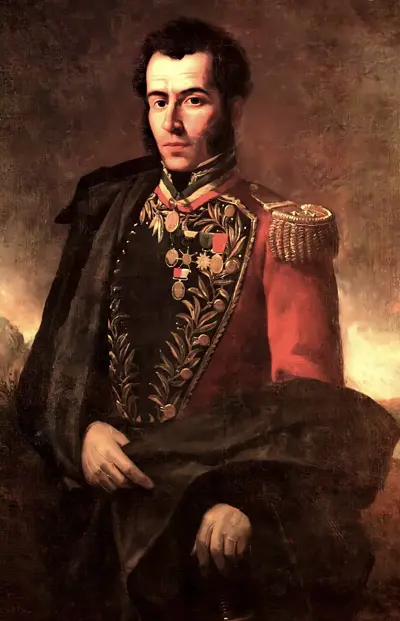
Antonio José de Sucre y Alcalá (Spanish pronunciation: [anˈtonjo xoˈse ðe ˈsukɾe j alkaˈla] (listen); 1795–1830), known as "Gran Mariscal de Ayacucho" (English: "Grand Marshal of Ayacucho"), was a Venezuelan independence leader who served as the 4th President of Peru and as the 2nd President of Bolivia. Sucre was one of Simón Bolívar's closest friends, generals and statesmen.
