Richard Nixon Quotes
I want to be sure...that nothing is done on these veterans. Is that understood?...Is the word out? That they are not to touch em, they are not to do a thing?...Get a hold of the district police; they're not to touch them, they're to do nothing: Just let em raise Hell.
Nixon, Richard. White House Tapes. National Archives and Records Administration, April 1971.


The professor was addressing a theory of some gun rights advocates that the framers of the constitution intended the 2nd Amendment as a check on a dictatorial Federal Government. The history of the militias shows that they have been used by states never to foment rebellion but often called out to suppress rebellions of citizens who thought that their rights had been infringed such as Shays Rebellion, the Whisky Rebellion and the repeated use of state militias to enforce laws and quell riots and labor disputes.

This general perception led the Founding Fathers to place profound restrictions on the allowable role of the military in national law enforcement—a condition that exists to this day.


There is a , romantic American myth about the Militiamen in Colonial and Revolutionary America—the citizen soldiers who would leave their farms and rise to the military necessity of the day. However, not only were the militia very hard to muster to duty, but most actually didn’t own or have experience with firearms, and the prevailing opinion of knowledgeable military leaders from George Washington on down was that the militia were not very good soldiers. See {613015}, {613016}, {613022}, {613027}, {621987}, {621988}, {613030}, {613033}, & {613056}

This proclamation was obviously unconstitutional, but at the time no one challenged it in the courts. It is yet another example, where in an emergency, executive officers of government tend to over-reach and expand their power and authority using the necessity of the emergency as the justification. This case was particularly ironic in that the mayor, so concerned with law and order that he would summarily kill people suspected of looting, was indicted and convicted for corruption the following year. His jail time was limited by a successful court appeal, and he then lost as a mayoralty candidate, but did finally get elected to the San Francisco City Council. Of course, had he been shot when first suspected of his crime—as he proscribed for others--he would never have had the opportunity to appeal and be acquitted.

All the human and civil rights abuses of its citizens by governments are ALWAYS justified as necessary preservation of law and order.
A Molotov cocktail is a glass bottle filled with gasoline and a cloth wick stuffed in the mouth of the bottle. Lighting the wick on fire and throwing the bottle at a target is a deadly weapon. Daley’s instruction if followed would have itself been a felony under Illinois law. Deadly force may only be used to preserve the life or safety of the public. If someone was making and holding Molotov cocktails in the middle of an open field and there were no people around, there would be no imminent danger and the police have many other ways of disarming and arresting the potential rioter or arsonist.

He had no authority to do this. He just took it upon himself. This was one of the incidents which caused later Congresses to pass very strict laws limiting the authority of all Federal Military and other intelligence and police forces so that they have little or no authority within the United States. President Lincoln did not allow the order to stand, although he repudiated it very delicately and as privately as possible. Many in his own party strongly favored this proclamation as it cracked down on the Southern Rebels and emancipated slaves—both objectives of many Republicans. In addition, Fremont was very popular with the people and had strong political connections. (He would later run for President.) See {635739}.


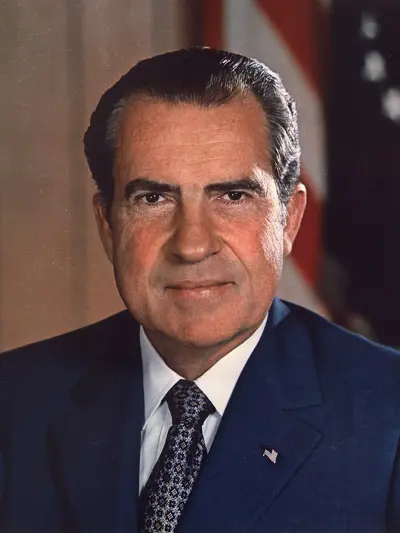
Richard Milhous Nixon was the 37th president of the United States, serving from 1969 to 1974. A member of the Republican Party, Nixon previously served as the 36th vice president from 1953 to 1961, having risen to national prominence as a representative and senator from California. After five years in the White House that saw the conclusion to the U.S. involvement in the Vietnam War, détente with the Soviet Union and China, and the establishment of the Environmental Protection Agency, he became the only president to resign from the office, following the Watergate scandal.
