Billy Graham Quotes
I told him that when he left office he should become an evangelist and leave his wife to run the country.
Billy Graham, Christian Protestant Evangelist, Description of advice he gave President William Clinton, Quoted on CBS, Sunday Morning, June 26, 2005
Sourced by: Eigen's Political and Historical Quotations


This particular rally targeted men rather than women. The nation was in a severe recession, and the audience of mostly men cried, “No!


Philip II, by this statement, and his subsequent behavior, made a major step forward in France for the separation of church and state. Previously, French kings played a major part in the selection of the bishops and other high clerics of the realm. Phillip ceased that type of interference. He did however, close down a religious commune for misbehavior, but that was at the request of both the church and civil authorities. See {617074} . The religious authorities at the time were delighted with this form of separation of church and state, but they were adamant that their church should be able to influence the monarchy and laws of the realm. In contrast today, the Chinese government does not allow any religion to interfere with the operation of the government, but insists that the Dali Lama and the Bishops of the Catholic church can only be appointed with their approval. Separation of church and state is a two way phenomenon.


The active involvement of organized religion in partisan politics is nothing new. The Methodist church not only actively campaigned for Abraham Lincoln, but viewed him as the selection of God.


Critics were divided as to whether this illustrated that Graham was very naïve or very hypocritical. Graham had given Nixon a platform but he attended many Nixon events and was thought of as close to the President. When Watergate finally broke out in the open, Graham, had a major realignment of his view of politicians and has never gotten as close to any politician or appeared to favor a politician since.


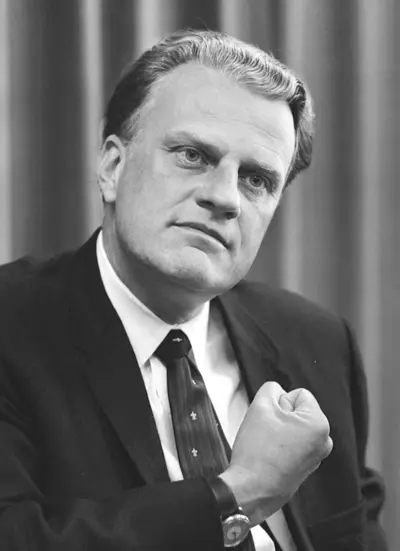
William Franklin Graham Jr. was an American evangelist, a prominent evangelical Christian figure, and an ordained Southern Baptist minister who became well known internationally in the late 1940s. One of his biographers has placed him "among the most influential Christian leaders" of the 20th century.
