Whitfield Diffie Quotes
I thought of computers as very low class. I thought of myself as a pure mathematician and was interested in partial differential equations and topology and things like that.
Levy, Steven. Crypto: How the Code Rebels Beat the Government—Saving Privacy in the Digital Age. Viking, 2001, p. 34.


He was one of the team that created the first Atomic Bomb. In 1946, the atomic bomb was known about by almost all Americans and almost no one had even heard of a computer or the concept of a computer. The British and Americans during the war had collaborated to build very limited electronic calculating machines but the concept of programs to control the calculating machines was new—initially created by van Neumann and Englishman Alan Turing. When he made this statement most people thought it was the ravings of a “mad scientist. He was one of the team that later developed the first real computer at the Institute for Advanced Study at Princeton.”

He was one of the fathers of modern computer science and the first serious programmer. Before there were computers generally available, he had programmed special IBM machines to crack the German’s “uncrackable” Enigma code.

He is often called the “Father of Algebra” as the first person who actually wrote instructions for algebraic processes. At the time, Western mathematics was totally stagnant and intellectual development stifled by the Dark Ages and the Church.


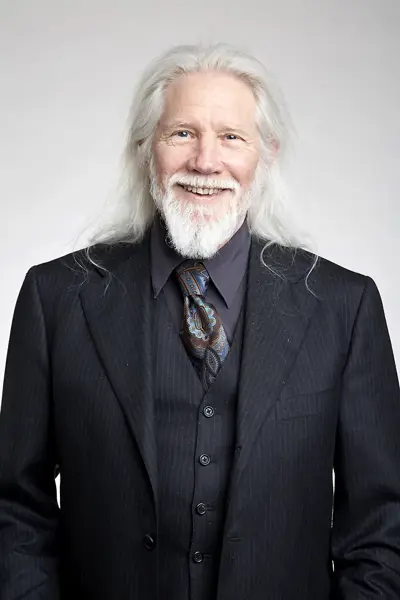
Bailey Whitfield 'Whit' Diffie, ForMemRS, is an American cryptographer and one of the pioneers of public-key cryptography along with Martin Hellman and Ralph Merkle. Diffie and Hellman's 1976 paper New Directions in Cryptography introduced a radically new method of distributing cryptographic keys, that helped solve key distribution—a fundamental problem in cryptography. Their technique became known as Diffie–Hellman key exchange. The article stimulated the almost immediate public development of a new class of encryption algorithms, the asymmetric key algorithms.
