Edsger Dijkstra Quotes
Computer science is no more about computers than astronomy is about telescopes.


He is often called the “Father of Algebra” as the first person who actually wrote instructions for algebraic processes. At the time, Western mathematics was totally stagnant and intellectual development stifled by the Dark Ages and the Church.

He was one of the fathers of modern computer science and the first serious programmer. Before there were computers generally available, he had programmed special IBM machines to crack the German’s “uncrackable” Enigma code.

He was one of the team that created the first Atomic Bomb. In 1946, the atomic bomb was known about by almost all Americans and almost no one had even heard of a computer or the concept of a computer. The British and Americans during the war had collaborated to build very limited electronic calculating machines but the concept of programs to control the calculating machines was new—initially created by van Neumann and Englishman Alan Turing. When he made this statement most people thought it was the ravings of a “mad scientist. He was one of the team that later developed the first real computer at the Institute for Advanced Study at Princeton.”
A quantum computer is a radically different kind of computer that uses the physics of Quantum Mechanics—the latest of the large systemic Physics breakthroughs for which there has as yet been very little technology or practical applications. In theory quantum computing will be much more powerful and orders of magnitude faster than existing supercomputers.


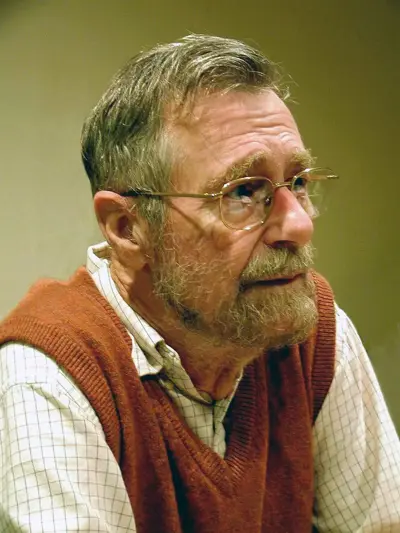
Edsger Wybe Dijkstra was a Dutch computer scientist, programmer, software engineer, systems scientist, science essayist, and pioneer in computing science. A theoretical physicist by training, he worked as a programmer at the Mathematisch Centrum (Amsterdam) from 1952 to 1962. A university professor for much of his life, Dijkstra held the Schlumberger Centennial Chair in Computer Sciences at the University of Texas at Austin from 1984 until his retirement in 1999. He was a professor of mathematics at the Eindhoven University of Technology (1962–1984) and a research fellow at the Burroughs Corporation (1973–1984). In 1972, he became the first non-American, non-British, and continental European winner of the Turing Award.
