Abbas Kiarostami Quotes
I think violence can never be justified. At the same time, nobody’s culture or beliefs should be insulted, that’s not something I can accept either. But I cannot justify or accept any violence at all.
Kiarostami, Abbas. Abbas Kiarostami: Interviews. Edited by Mehrnaz Saeed-Vafa, University Press of Mississippi, 2018.


Religious and ethnic political conflict had broken out in Fiji. Some in the Christian majority strove to make Fiji officially a “Christian country” and marginalize the Indian Hindu minority. The archbishop opposed and thwarted them.

This is a particularly noteworthy quotation as Muslims are often accused of intolerance and here is a Muslim who argues that it is the responsibility of religious leaders to present religion in a tolerant manner.


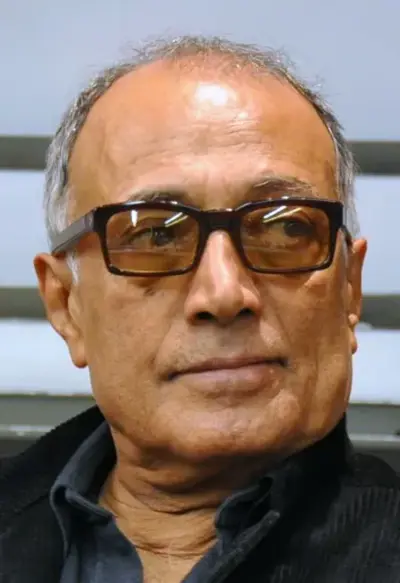
Abbas Kiarostami was an Iranian film director, screenwriter, poet, photographer, and film producer. An active film-maker from 1970, Kiarostami had been involved in the production of over forty films, including shorts and documentaries. Kiarostami attained critical acclaim for directing the Koker trilogy (1987–1994), Close-Up (1990), The Wind Will Carry Us (1999), and Taste of Cherry (1997), which was awarded the Palme d'Or at the Cannes Film Festival that year. In later works, Certified Copy (2010) and Like Someone in Love (2012), he filmed for the first time outside Iran: in Italy and Japan, respectively. His films Where Is the Friend’s Home?, Close-Up, and The Wind Will Carry Us were ranked among the 100 best foreign films in a 2018 critics' poll by BBC Culture. Close-Up was also ranked one of the 50 greatest movies of all time in the famous decennial Sight & Sound poll conducted in 2012.
