Robert Nozick Quotes
I think philosophers can do things akin to theoretical scientists, in that, having read about empirical data, they too can think of what hypotheses and theories might account for that data. So there's a continuity between philosophy and science in that way.
Sanchez, Julian. "An Interview with Robert Nozick." Laissez Faire Books, 26 July 2001.


He was addressing the misunderstanding that many laypeople and most anti-evolutionists have that if Evolution is only a theory why put so much stock in it. The layman often uses the word “theory” in opposition to “fact.” But to the scientist theories are of different types—those that are as of yet speculation and those for which a strong body of evidence exists. Evolution, like Relativity, has a huge amount of evidence supporting it. Yet in time every good scientist knows that all these proven theories will be modified with new knowledge. Relativity has been demonstrated as having errors initially by Einstein himself. The essence of these things are true although elements change. The early law of gravity is the best example. We know that it is wrong in many, circumstances—in space for example. But it, none the less, is fundamental to much analysis and with our much more sophisticated understanding of it we still talk of the “Law” of gravity even though we realize that it is not quite correct in all circumstances.

Historically, in the first half of the 20th century, nuclear scientists discovered that probability governed and was necessary for understanding quantum mechanics—the laws of physics governing tiny objects like atoms, electrons, protons and even quarks. To many, this seemed a contradiction in that it was hard to conceive particles following laws and yet behaving randomly at the same time. However, it did not take long before all the scientists adjusted their thinking and learned to live and work with that was then a type of contradiction but is no longer thought so as men and women have learned to think in a new way. This quotation illustrates that the greatest scientists in the world, in a very short period of time, had to change their entire mode of thinking. There were no real holdouts or “conservatives” who wanted to maintain the older values. This would never happen in politics, where change is not accepted very quickly.

Belief and/or ideology of even teh vast majority or the world has no influence on the vaidity and truth of science. A particualr scientific statement is true or not based an many factors, none of which have anything to do with beliefs, world views, custims, cultures, or religious doctrine.


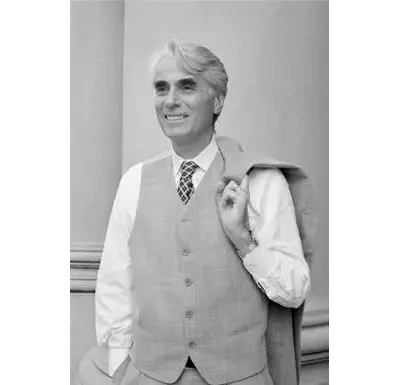
Robert Nozick was an American philosopher. He held the Joseph Pellegrino University Professorship at Harvard University, and was president of the American Philosophical Association. He is best known for his books Philosophical Explanations (1981), which included his counterfactual theory of knowledge, and Anarchy, State, and Utopia (1974), a libertarian answer to John Rawls' A Theory of Justice (1971), in which Nozick also presented his own theory of utopia as one in which people can freely choose the rules of the society they enter into. His other work involved ethics, decision theory, philosophy of mind, metaphysics and epistemology. His final work before his death, Invariances (2001), introduced his theory of evolutionary cosmology, by which he argues invariances, and hence objectivity itself, emerged through evolution across possible worlds.
