William Whipple Quotes
I think experience has shown that privateers have done more toward distressing the trade of our enemies, and furnishing these States with necessaries, than Continental Ships of the same force.
Whipple, William. "Letter to Josiah Bartlett, 12 July 1779." Letters of Delegates to Congress, 1774-1789, edited by Paul H. Smith, vol. 13, Library of Congress, 1986, pp. 201-202.


Raiders operating out of the Barbary Coast typically would attack any American shipping seizing the goods and the ship and ransoming the crew or passengers or selling them as slaves. English and French governments had paid the Tripoli tribute for safe passage. The President and Congress sent American ships to in effect blockade the corsairs in their harbors.


There were few military thinkers at that time who would agree with Goebbels on this point.

Churchill was then First Lord of the Admiralty. The German sinking of the Lusitania indeed did provoke America into the war.

The Persians arrived at an abandoned city and burned some of the major buildings. All the Athenian men went to the island of Salamis where he gathered Greeks from the other city states. They boarded ships and tricked the march larger Persian fleet into coming into the narrow part of the straits where it could not maneuver. The Greeks destroyed the Persian fleet with relatively few losses and with it went Xerxes dreams of conquest of the Greeks. The Persian navy could not feed their army and the Persians, the greatest empire of the day, retuned to Persia in defeat.

In 1930, Japan, Britain, and the United States had signed an agreement that submarines would not sink merchant vessels without having first placed passengers and crew in a place of safety. However, when Japan attacked Pearl Harbor and bombed civilians as well as military and had a pattern of bombing and shelling civilians in China, the U. S. took the position that Japan had abrogated all treaties and therefore abrogated the 1930 treaty. It was more of a symbolic gesture as at the time the American forces were in no shape to attack Japanese merchant shipping though later in the war, it became material. By that time, the Japanese had murdered American prisoners of war on the Bataan Death March and elsewhere and had slaughtered civilians in the Philippines and all the other territories that they invaded. The niceties of the 1930 treaty was one of the first casualties of Japanese aggression.

Many people are surprised that Washington had a small navy, and he made very effective use of it. He had 8 schooners ranging from 40-80 tons, each armed with 4-10 cannon and manned by overly large crews (for sailing and firing the guns at the same time) of volunteer expert seamen from Marblehead and Beverly. However, he used his ships very strategically. The British were blockading Boston {636957} yet they themselves had to be resupplied from England or Canada or by small boats to their various military encampments and ships around Boston. It was this resupply and troop movement that Washington interdicted. In a sense, he blockaded the blockaders. . Of the 35 supply ships the British sent to Boston in 1775, only 8 got through Washington’s Navy. Note that Washington ordered offensive operations in the latter part of 1775, before the hostilities of 1776.

Roosevelt was then the Assistant Navy Secretary. However, the Secretary was on vacation and Roosevelt as Acting Secretary anticipated the Spanish American War. TR had also ordered large amounts of supplies and ammunition and when the President and Congress were faced with the possibility of war with Spain, the Navy was fully ready for war enabling the Declaration.
Most Americans do not realize that our naval forces were disbanded after the Revolution and even the Constitution did not require a navy. We had some Federal revenue cutters to interdict smugglers but no warships and no permanent sailors or officers. The Barbary Pirates had an incredible extortion racket going in the Mediterranean. If nations would pay them an annual sum each year, they would not attack and seize merchant ships of that country and sell the ships and goods while holding the sailors for ransom. See {640850},86703,{640846} & {640848}


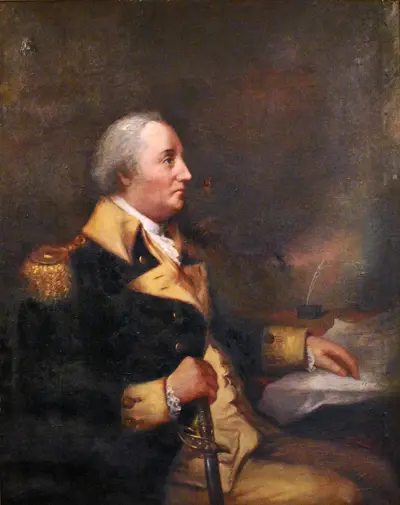
William Whipple Jr. was a signatory of the United States Declaration of Independence as a representative of New Hampshire and a member of the Continental Congress from 1776 through 1779. He worked as both a ship's captain and a merchant, and he studied in college to become a judge. He died of heart complications in 1785, aged 55.
