John Lewis Quotes
I studied the philosophy and the discipline of non-violence in Nashville as a student. And I staged a sitting-in in the fall of 1959 and got arrested the first time in February 1960.
Lewis, John. Walking with the Wind: A Memoir of the Movement. Simon & Schuster, 1998.


Turnbow, a Black man in segregationist Mississippi, always carried guns for self-protection and advocated it for all Blacks.


This was King’s first appearance on the nation’s most prestigious news show.


His strategy was to fill the jails of Birmingham, and asked the young people to help. The next days saw virtually all the Birmingham high school students our of school and in the streets protesting which was then against the un-Constitutional laws of Birmingham and Alabama. The students were arrested by the droves and the white authorities, believing that they were being firm against “radical lawbreakers”, fell into the trap, and became a travesty to most of the country and the rest of the world and the hundreds of jailed students beaten and assaulted raised the consciousness of whites as well as Blacks.

There was a planned boycott of the Olympics protesting three factors: Avery Brundage, the long serving head of the American Olympic Committee was a notorious racist and anti-Semite, Apartheid South Africa and Rhodesia had been invited to the Olympics, and there were almost no Black coaches of the American Olympic team while the majority of the athletes were Black. Dr. King met with the organizing athletes. The boycott did not get organized soon enough and did not materialize. However, Carlos and Tommy Smith made the famous raised fist gesture during the Olympic victory ceremony, and the third medal winner Australian Peter Norman wore a button supporting the protest at the ceremony. All 3 athletes faced serious retribution afterwards.

The South was segregated at the time and Negroes were required by law to sit in the back of the busses. There were no seats left in the back and Ms. Parks sat in the “white” section causing her to be arrested. That act ignited public opinion, led to Black boycotts of segregated busses, and morphed into the civil rights movement.

He advocated no cooperation with the British Colonial Administration which depended on Indian officials, administrators, clerks and other workers. The boycott strategy never worked in this case, but civil disobedience did. Boycott did work against the apartheid regime in South Africa a half century later however.


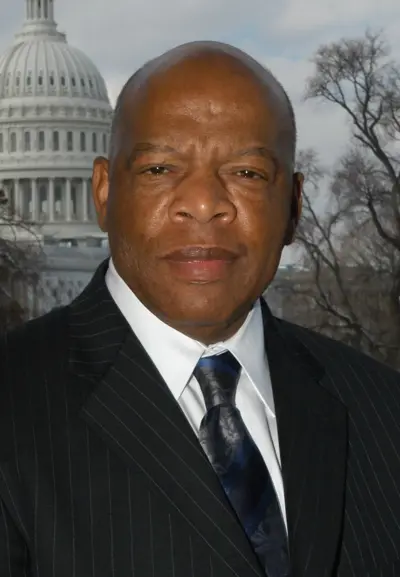
John Robert Lewis was an American politician, statesman, and civil rights activist and leader who served in the United States House of Representatives for Georgia's 5th congressional district from 1987 until his death in 2020. He was the chairman of the Student Nonviolent Coordinating Committee (SNCC) from 1963 to 1966.
