W. Edwards Deming Quotes
I predicted in 1950 that in five years, manufacturers the world over would be screaming for protection. It took only four years.
Deming, W. Edwards. Out of the Crisis. Massachusetts Institute of Technology, Center for Advanced Engineering Study, 1986.


He was right about what the Japanese made at the time. But they had an amazingly pragmatic solution for this problem. They simply changed all their product decision making to make the things that Americans did want. As a result they completely negated Dulles's prediction about the American Market and within a few years were exporting more manufactured goods to American than any other country.


In October 2025 (ahead of ongoing trade negotiations), the Ontario Provincial Government (Canadian) produced a video ad distributed in the US using a voice-over of the above quote from a 1987 Ronald Reagan Presidential Radio Address. The ad uses five complete sentences from the five-minute weekly address, but they are spliced together out of sequence. Also, while the ad implies Reagan was against tariffs, it omitted the context that he was using the radio address to announce new tariffs imposed on Japan by his administration but that they should be seen as an unavoidable exception to his basic belief in free trade as the key to prosperity. He said, “our commitment to free trade is also a commitment to fair trade.” President Trump accused the Ontario government of producing a fraudulent ad and of attempting to influence the US Supreme Court as it prepares to hear arguments about the legality of Trump’s tariffs. As a result, the Trump administration terminated trade negotiations with Canada.


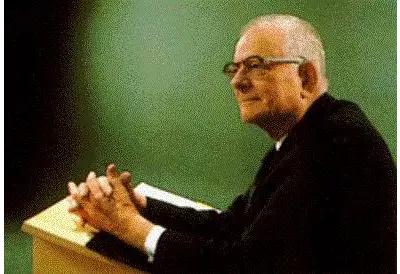
Dr. William Edwards Deming was an American engineer, statistician, professor, author, lecturer, and management consultant. Educated initially as an electrical engineer and later specializing in mathematical physics, he helped develop the sampling techniques still used by the U.S. Department of the Census and the Bureau of Labor Statistics.
