Nathan Bedford Forrest Quotes
I have never on the field of battle sent you where I was unwilling to go myself, nor would I now advise you to a course which I felt myself unwilling to pursue. You have been good soldiers. You can be good citizens. Obey the laws, preserve your honor, and the government to which you have surrendered can afford to be and will be magnanimous.
United States War Department. The War of the Rebellion: A Compilation of the Official Records of the Union and Confederate Armies. Series 1, Vol. 49, Part 2, Government Printing Office, 1897, p. 1289.


Samuel Langhorne Clemens, 1835-1910


Trumbo was morally opposed to war. He also refused to name Hollywood communists to Congressional Committees during the Red Scare. He was then blacklisted from his occupation, screen writing.

HF 2598*/SF 2411/CH 391


The Mormons are have become an International Church with members in almost every nation. Few religions have so explicitly advocated obedience to the civil law.


He was a Republican who served a Democratic President to the distress of some of the extreme right wingers of the Republican Party.


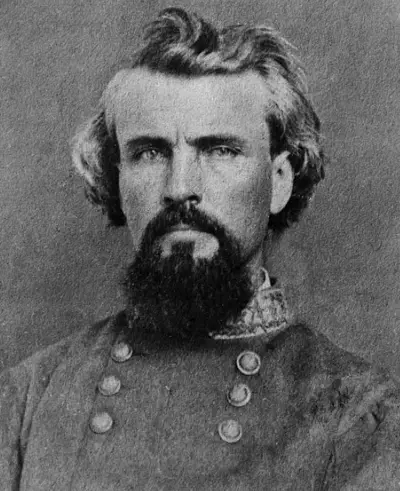
Nathan Bedford Forrest was a prominent Confederate Army general during the American Civil War and the first Grand Wizard of the Ku Klux Klan from 1867 to 1869. Before the war, Forrest amassed substantial wealth as a cotton plantation owner, horse and cattle trader, real estate broker, and slave trader. In June 1861, he enlisted in the Confederate Army and became one of the few soldiers during the war to enlist as a private and be promoted to general without any prior military training. An expert cavalry leader, Forrest was given command of a corps and established new doctrines for mobile forces, earning the nickname "The Wizard of the Saddle". His methods influenced future generations of military strategists, although the Confederate high command is seen by some commentators to have underappreciated his talents. Although scholars generally acknowledge Forrest's skills and acumen as a cavalry leader and military strategist, he has remained a controversial figure in Southern racial history for his main role in the massacre of several hundred Union soldiers at Fort Pillow, a majority of them black, coupled with his role following the war as a leader of the Klan.
