William Jennings Bryan Quotes
I have even shaken hands with Mr. [William Randolph] Hearst. A man who is in politics is required to shake hands with almost everybody without requiring a certificate of character.
William Jennings Bryan, 1860-1925, U. S. Secretary of State, U. S. Congressman (Democrat, NB), 3 Time Unsuccessful Democratic Presidential Candidate, Statement. Democratic National Convention, Baltimore, MD, Quoted in The New York Tribune, July 2, 1912
Sourced by: Eigen's Political and Historical Quotations


The statement was made in the midst of the Cold War. There was a political battle ongoing over a national park in Wyoming. In the 1930s & 1940s John D. Rockefeller Jr. had tried to give his 33,000 acres of land adjacent to the Grand Teton National Park to the Federal Government as a park expansion. Residents of Wyoming at the time did not want the land to go to park use but wanted it available for commercial development & in a paranoid concern about the Federal Government controlling “their land,” Wyoming politicians blocked transfer. Finally Rockefeller wrote FDR telling him to take the land or he would sell it. The President did not have power to accept land to form a national park without Congressional action. So FDR did what his cousin TR had done and declared the land a national monument which transferred ownership to the government. Then Albright
tried to incorporate it into the park system & fought for years with the special interests and politicians of Wyoming.

He was referring to the role of an Israeli political leader who was negotiating with the PLO. The civility of shaking hands with leaders of what had been a terrorist organization that had been responsible for the deaths of many Israelis. The great statesmen have to negotiate with their enemies.


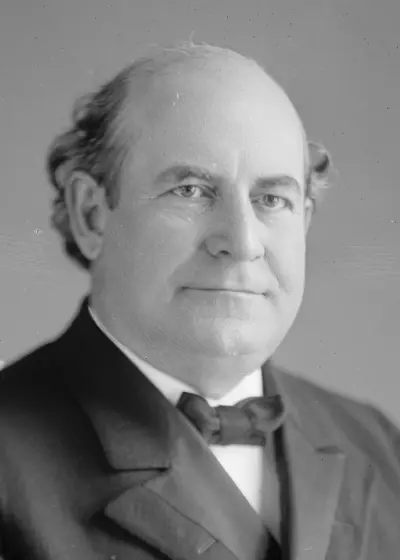
William Jennings Bryan was an American orator and politician from Illinois and Nebraska. Beginning in 1896, he emerged as a dominant force in the Democratic Party, running three times as the party's nominee for President of the United States in the 1896, 1900, and 1908 elections. He also served in the United States House of Representatives and as the United States Secretary of State under Woodrow Wilson. Because of his faith in the wisdom of the common people, he was often called "The Great Commoner".
