Samuel Morse Quotes
I have been so constantly under the necessity of watching the movements of the most unprincipled set of pirates I have ever known, that all my time has been occupied in defense, in putting evidence into something like legal shape that I am the inventor of the Electro-Magnetic Telegraph.
One of the limits of the patent systems for an individual or small company is the huge effort it takes to document an invention and enforce patent rights after getting a patent.
Samuel Morse, 1791-1872, Inventor, President, American Protestant Union, Letter to his brother, April 19, 1848
Sourced by: Eigen's Political and Historical Quotations


Business associates tried to persuade Tesla to not allow Marconi to experiment with radio as he was using many of Tesla’s patents. Tesla was not driven by money and wanted to see Marconi develop new science which he did. Tesla was one of the great American immigrant scientists. He found in America the kind of intellectual and operational freedom that did not exist in the rigid, monarch-controlled, Austro-Hungarian Empire. He developed patents and techniques that formed the technological bases of radio, telephone long distance, TV, cell phones, Wi Fi, just to name a few. Most important he was Thomas Edison’s great nemesis. Edison invented DC electric generators that could power factories or entire streets in a neighborhood. Tesler invented and developed AC electrical technology which could power entire cities and he could move electricity over long distances which Edison could not. Tesler was one of the first scientists to conceive of and try to implement “Big Science” where there were huge capital investments to develop machines and systems to do what had never been done before—philosophically like the CERN Hadron Collider. Tesler even convinced a large corporation to finance the construction of a massive building and tower so he could experiment with the wireless transmission of electricity. However, as the industrial democracies have learned, Big Science can only be funded by governments and it often takes sever working in consort to afford the huge investment that is required. In Tesler’s era, the federal and state governments did not fund scientific research so his work was not only technically ahead of his time but also conceptually. He anticipated most of the problems and need for a national power grid that was challenging America even at the beginning of the 21st century.


Even before being an independent country, America had two contrasting and contradictory views of patents—the one that Franklin herein states and the one what was written into the constitution that argued that by granting patents inventors would be incentivized to make their trade secrets public if they had an exclusive monopoly on if for a period of time. Both of these philosophies towards patents have coexisted since then. There was a Federal patent system for those who wanted to use it, and for those who did not, they could enter the invention to the public domain as Franklin urged. Arguably, we have obtained the best of both approaches. Millions of patents have been filed and granted and yet some of the most important inventions have followed the Franklin approach. See the quotes about the Salk Polio Vaccine—{29154} and {29187} and the quote on "open source" computer software—{29676}. With billions of dollars being made by protected software in the early 21st century, over half of the world's computers were operating on systems that was public domain and without charge as just one large example of the Franklin philosophy still coexisting.


Many people believe that patents—especially in the high technology arena—actually inhibit innovation.
This is a very important quotation in the Patent world. One of the major justifications for giving patent monopoly to an inventor is that without the patent protection people would not invest time, effort or money to invent things. However many of the great inventors have not agreed. The original Constitutional purpose in granting patents was to stimulate disclosure of technology to other inventors and educate the nation. That is why all patents are public and can be viewed by all.

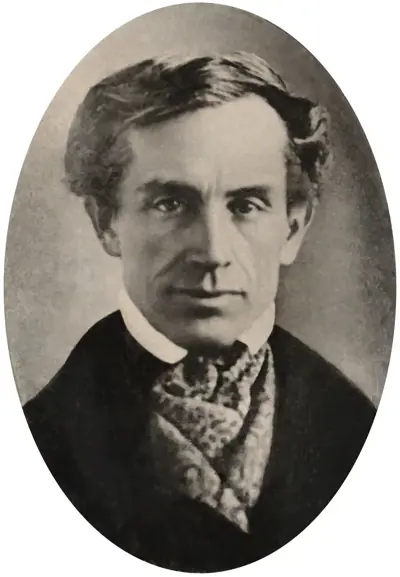
Samuel Finley Breese Morse was an American inventor and painter. After having established his reputation as a portrait painter, in his middle age Morse contributed to the invention of a single-wire telegraph system based on European telegraphs. He was a co-developer of Morse code and helped to develop the commercial use of telegraphy.
