Waldo David Frank Quotes
I have avoided party “splits” … I know of nothing sillier for us to do than to split our thinking into the divisions that are now part of the history of Communism in Russia.
Every sect of Russian communism had an offshoot in America and in other countries as well. When bad blood broke out between sects in Russia, the battle spread to the rest of the world as when Leon Trotsky was assassinated by Stalinists in Mexico and the Trotskyites were viciously and physically attacked here in America. In many cases there was little ideological difference but the split reflected different leadership styles and personalities. Despite Frank’s warning, American communism was a mirror reflection of Russia until Stalin negotiated the WWII pact with Hitler, when anti-Stalin Communists began to be active, and because America was a more open society, American communists were ahead of their Russian comrades in denouncing Stalinism.
Waldo David Frank, 1889-1967, Writer & Social Historian, Quoted in Irving Howe, The American Communist Party: A Critical History, 1957
Sourced by: Eigen's Political and Historical Quotations

He was providing historical perspective to the 2016 Republican Party split in which nativism and anti-immigration was a major factor.

Charles Ruthenberg, the general secretary of the American Communist Party, died in March 1927 amidst a lasting struggle to maintain factional parity within the party.

1st Earl of Beaconsfield


Parliamentary representatives of the Communist Party shall not introduce or support reform measures.
The Party line at the time was that any reform of the democratic institutions of America would simply delay the complete revolution. Let things get worse and then act; don’t try and fix them.


“Republicans” then referred to strong opponents of not only monarchy, but opposed a strong Presidency and federal government. The Federalists who supported John Adams for reelection to a 2nd term, were trounced so badly that it was the end of the Federalist Party. Their attacks on Jefferson had been particularly vicious with the hyperpartisanship as bad as in the early years of the 21st century. Jefferson tried to unify the nation with this quotation. It helped but there was still much bitterness.

Seeger’s admission was typical of tens of thousands of Americans who had become disillusioned with the fairness, equity, and effectiveness of capitalism during the depression. They were easy prey for Communist propaganda which pointed out all the problems in American society from legal racial discrimination to lack of a social safety net while at the same time lying about the Russian achievements and hiding the horrible abuses of human rights—especially the political murders of millions of people. Then the truth about Russia emerged, Seeger and so many others abandoned the Communist Party as at the same time America was improving its society and beginning to try and deal with the great problem that had plagued America from its inception—racism and slavery.


The Italian Communists were culturally and ideologically very different from the Russian Communists. The Italian view was a more nationalistic one and was closer to a Socialist Democracy than a “dictatorship of the proletariat”. Much more tolerant of diversity and not as ideological. See {637829} as a big example of the difference. Yet this was still in the midst of the Red Scare in America and some other areas of the West. After WWII, the CIA had secretly spent millions to get Italians to vote for the non-Communist candidates and helped organize Italian anti-Communist politicians who didn’t want the Communists to alter the Italian government to reflect any Communist or Socialist ideas. Meanwhile, the Italian party was under great pressure from Russia and some of the other Communist satellite countries to adopt a hardline revolutionary communist programs. Berlinquer and other Italian Communist leaders had many misgivings about Russian style Communism and they had to play off one side against the other for years.

Trump, in the 2016, Presidential Campaign viciously attacked not only his Republican opponents for the Republican Nomination, but almost every other Republican leader, the Republican National Committee members and the “Establishment Republicans.” He not only called them names, and ridiculed them and their families, but he lied extensively about each of his opponents and the Republican National Committee. Trump also alienated women, Hispanics, Muslims across the country. The Republican party was fractured and there were great resentments. Many blamed Tump for the Party cleavage. However, what is interesting about this quotation is that Roy admits that there were huge cleavages within the party as the Result of the Tea Party Republicans intransigence before Trump entered the campaign. He just took advantage of it and used it to his advantage. Roy at this time saw the Republican splits and resentments as too deep to be able to bring the party together shortly. The split persevered.


Orthodox communist thinking assumed that the Blacks would “fall into the communist camp,” because of the legal support for racism and discrimination of the majority of America. While a few did, as Allen warned most would not as much of the communist doctrine was antithetical to Black cultural values. Religion is probably the best example. Allen was prescient.


who worked with the Communists. The Communists were to Flip-flop again when Russia needed arms and assistance to fight Hitler when the pact broke down. See {595773}

Despite the fact that many Americans saw communists and socialists as of the same ilk, socialists were very suspicious of communists—especially the “party discipline” and the lack of individual freedom, while the communists saw the socialists as just another form of fascism and attacked it violently. Later, the party line against socialists softened as Cold War communist strategy solicited assistance from the socialist, unaligned nations.
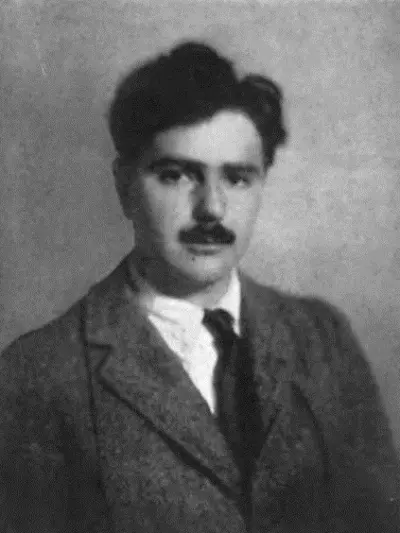
Waldo David Frank (1889-1967) was an American novelist, historian, political activist, and literary critic, who wrote extensively for The New Yorker and The New Republic during the 1920s and 1930s. Frank is best known for his studies of Spanish and Latin American literature and culture and his work is regarded as an intellectual bridge between the two continents.
