Irving Howe Quotes
So it went until the spring of 1927, when Charles Ruthenberg died and the struggle for factional parity at his casket – conducted, it must be said, somewhat more fairly than the struggle for parity at the fourth convention – climaxed the ceremonies to honor the first leader of American Communism.
Charles Ruthenberg, the general secretary of the American Communist Party, died in March 1927 amidst a lasting struggle to maintain factional parity within the party.
Irving Howe, 1920-1993, Historian, Political and Social Critic, The American Communist Party: A Critical History, 1957
Sourced by: Eigen's Political and Historical Quotations


Every sect of Russian communism had an offshoot in America and in other countries as well. When bad blood broke out between sects in Russia, the battle spread to the rest of the world as when Leon Trotsky was assassinated by Stalinists in Mexico and the Trotskyites were viciously and physically attacked here in America. In many cases there was little ideological difference but the split reflected different leadership styles and personalities. Despite Frank’s warning, American communism was a mirror reflection of Russia until Stalin negotiated the WWII pact with Hitler, when anti-Stalin Communists began to be active, and because America was a more open society, American communists were ahead of their Russian comrades in denouncing Stalinism.


Orthodox communist thinking assumed that the Blacks would “fall into the communist camp,” because of the legal support for racism and discrimination of the majority of America. While a few did, as Allen warned most would not as much of the communist doctrine was antithetical to Black cultural values. Religion is probably the best example. Allen was prescient.


Early political philosophers were very concerned about the conflicts that would be engendered in society by political parties. Many of the Founding Fathers had similar suspicions.


Seeger’s admission was typical of tens of thousands of Americans who had become disillusioned with the fairness, equity, and effectiveness of capitalism during the depression. They were easy prey for Communist propaganda which pointed out all the problems in American society from legal racial discrimination to lack of a social safety net while at the same time lying about the Russian achievements and hiding the horrible abuses of human rights—especially the political murders of millions of people. Then the truth about Russia emerged, Seeger and so many others abandoned the Communist Party as at the same time America was improving its society and beginning to try and deal with the great problem that had plagued America from its inception—racism and slavery.

The Tea Party Republican faction was opposed to government doing much of anything other than Defense and Foreign Policy. The regular Republicans saw a much more extensive and robust role of government though few did so to the same extent as Abraham Lincoln and the other founders of the Republican Party, and Theodore Roosevelt and Dwight D. Eisenhower the Republicans following in the Alexander Hamilton tradition.


Parliamentary representatives of the Communist Party shall not introduce or support reform measures.
The Party line at the time was that any reform of the democratic institutions of America would simply delay the complete revolution. Let things get worse and then act; don’t try and fix them.


1st Earl of Beaconsfield
Communists were supportive of the American war effort, not because they revered American capitalism and militarism, but because they were on the same side of Russia fighting against the fascist Nazis.


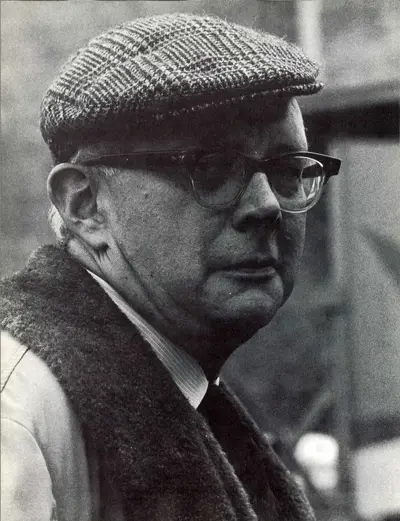
Irving Howe was an American literary and social critic and a prominent figure of the Democratic Socialists of America.
